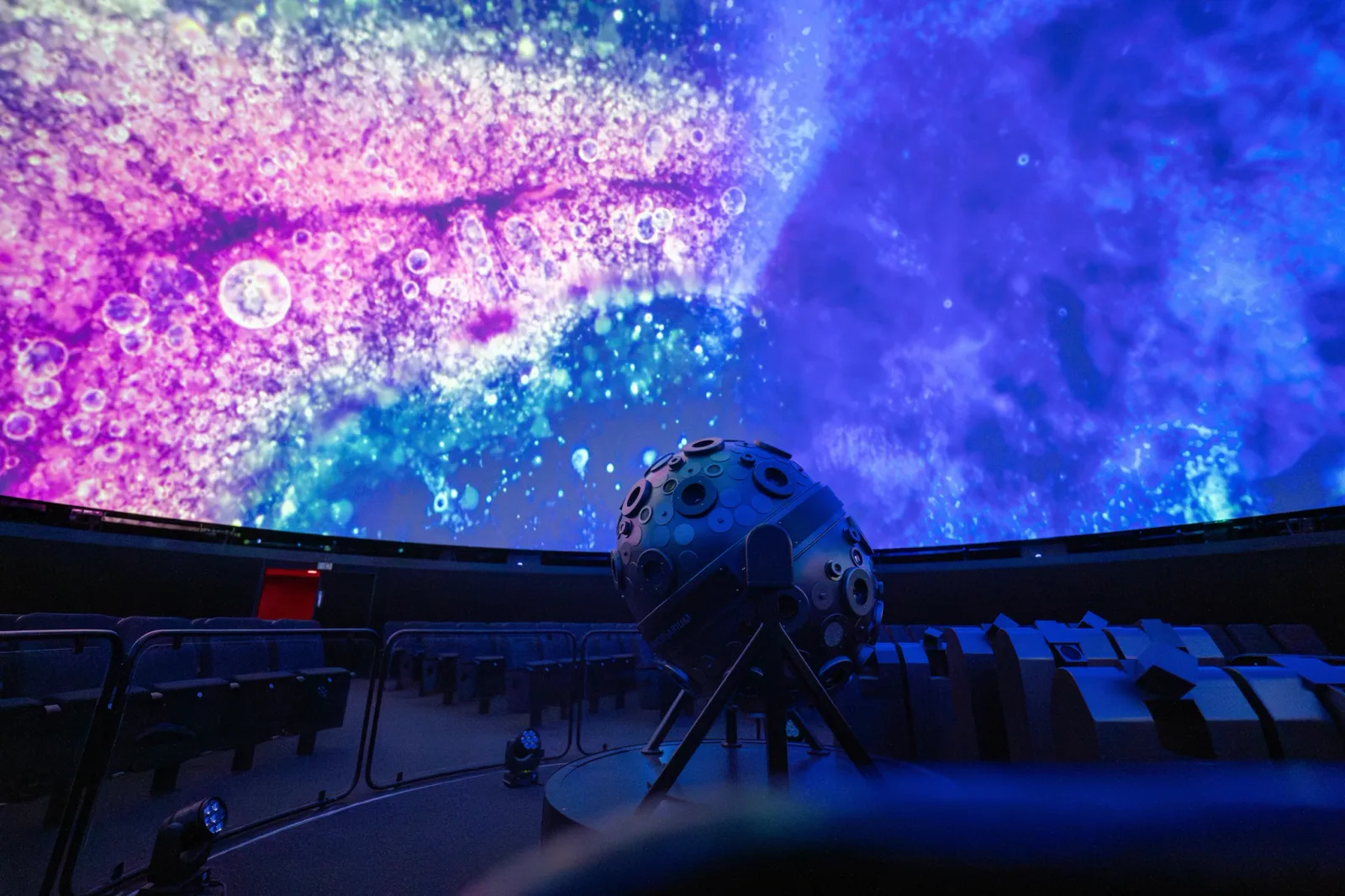
Circle 20 / Foam and Sand
Early music collaboration. Separate from the later Robot Koch / Monopol concert.
30.0 s · source excerpt Magnificent
Live microscopy / Spatial sound
A billion-year question meets the scale of a room: microscopic live imagery, ambient music and spatial sound at Monopol.
01 / The story
The title The Next Billion Years stretches time until ordinary concerns become almost microscopic. It asks for a perspective beyond the next decade and beyond the limits of an individual life.
The collaboration between Robot Koch and Magnificent Matter began not with a large strategy but through a shared interest in the relationship between immense questions and intimate details.
02 / The story
Robot Koch’s album began with a second-hand cassette labelled “Cousteau”. What was almost erased as empty tape contained a recording of Jacques-Yves Cousteau speaking from the past about the future of humanity and the planet.
That recording became the seed for an album that feels both cinematic and intimate: looking toward a distant future while drawing attention back to the present moment. This macro-and-micro duality created the point of entry for Magnificent Matter.
03 / The story
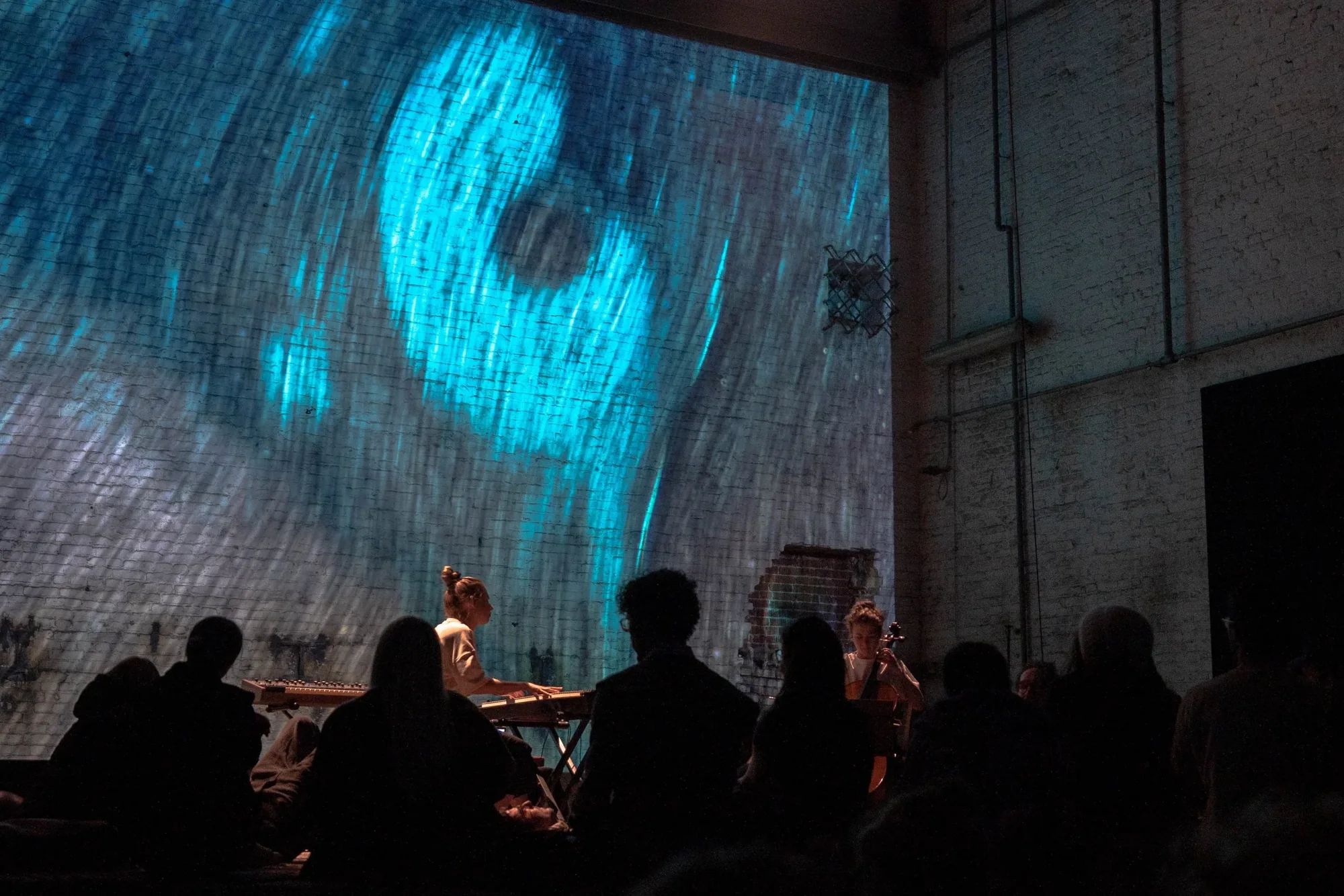
The Next Billion Years was recorded with orchestra and conductor, but the intended spring 2020 tour disappeared into the pandemic. During lockdown, Robot Koch developed Foam and Sand as a parallel ambient language: minimal, focused and stripped back to what was essential.
When the outside world became too large and uncertain, the work moved inward toward sound and presence. That shift closely paralleled Magnificent Matter’s own way of working with scale.
04 / The story
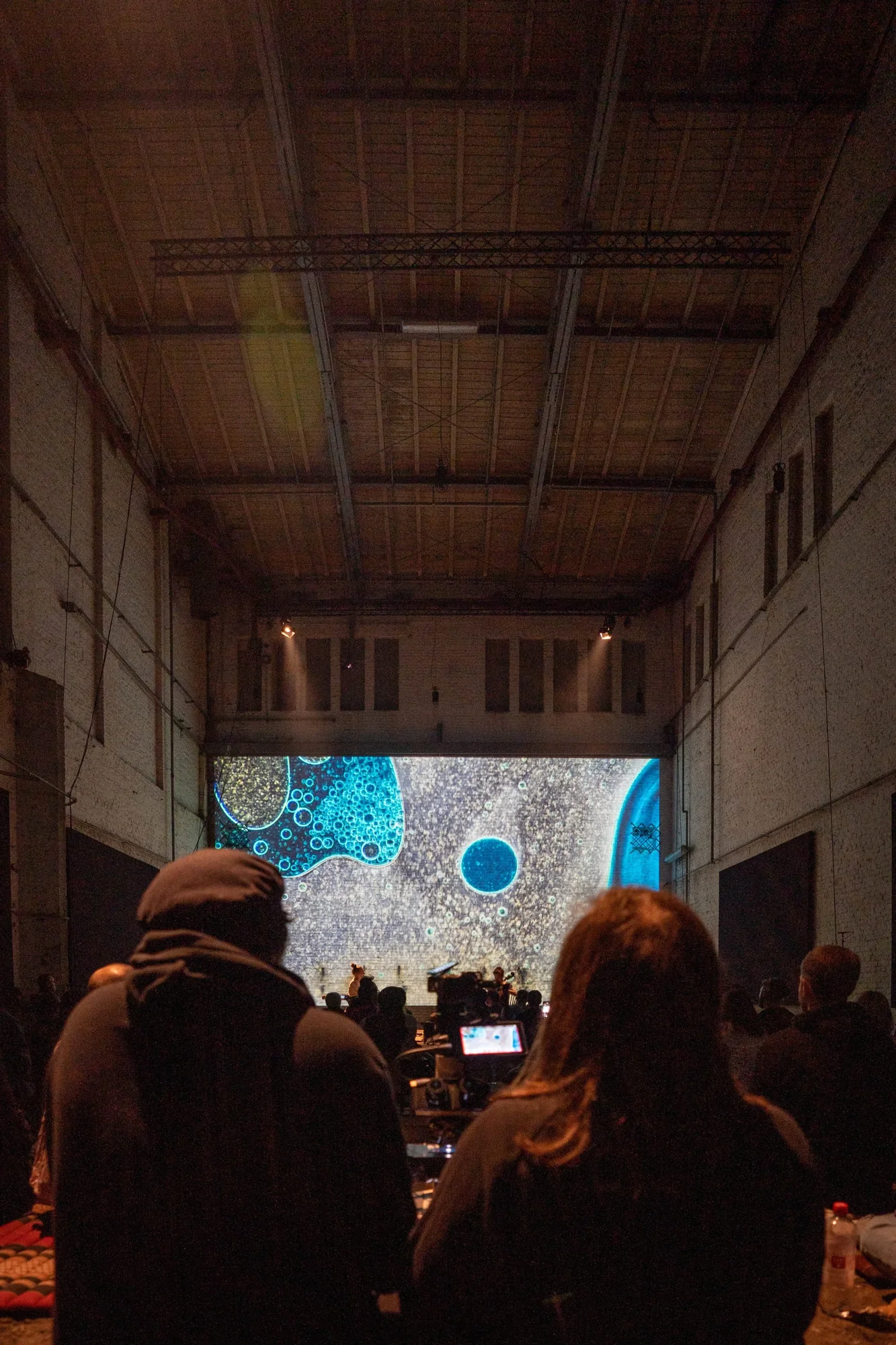
Magnificent Matter uses microscopy as a creative instrument to reveal patterns, textures, boundaries and movement that are discovered rather than invented. The Foam and Sand Reworks similarly zoom into the core of the music and remove what is not essential.
The visual approach therefore did not illustrate the album. It mirrored its philosophy, allowing a billion-year question to coexist with the intimacy of the present moment. Sound became detail, and detail became universe.
05 / The story
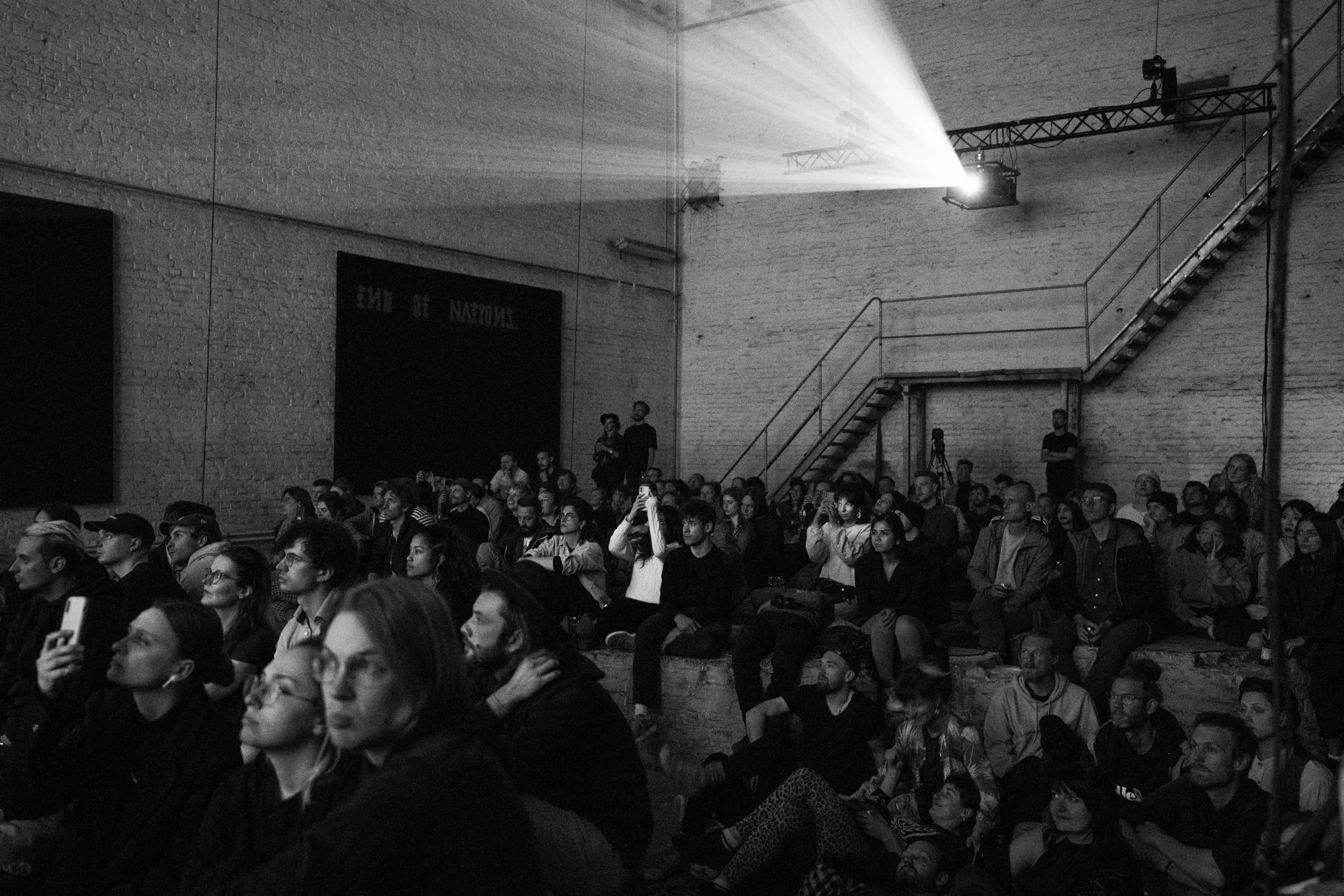
The collaboration first existed through moving images that translated Robot Koch’s sonic world into Magnificent Matter’s visual language of hidden detail. The Berlin performance allowed that digital relationship to become physical and shared by a room full of bodies.
06 / The story
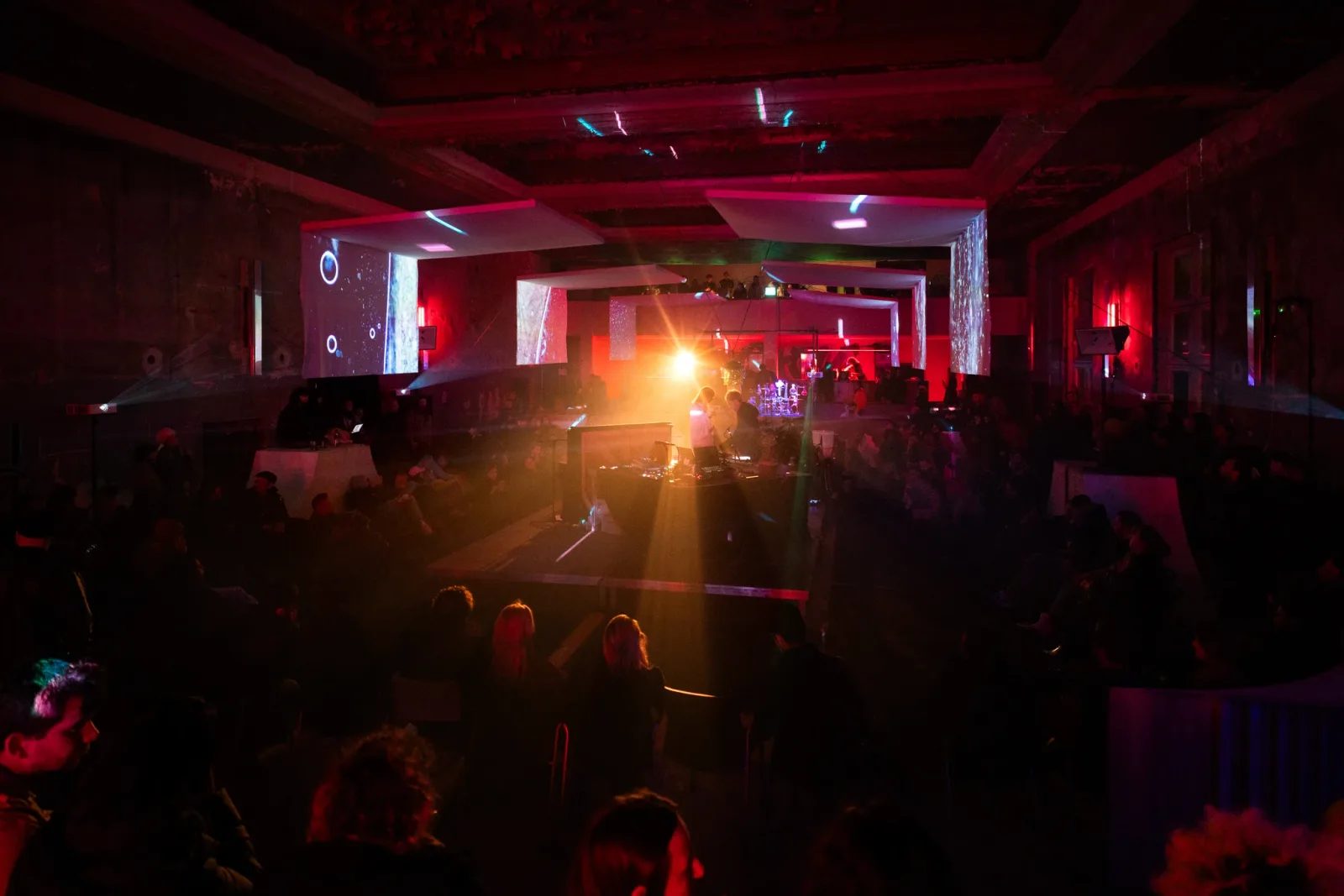
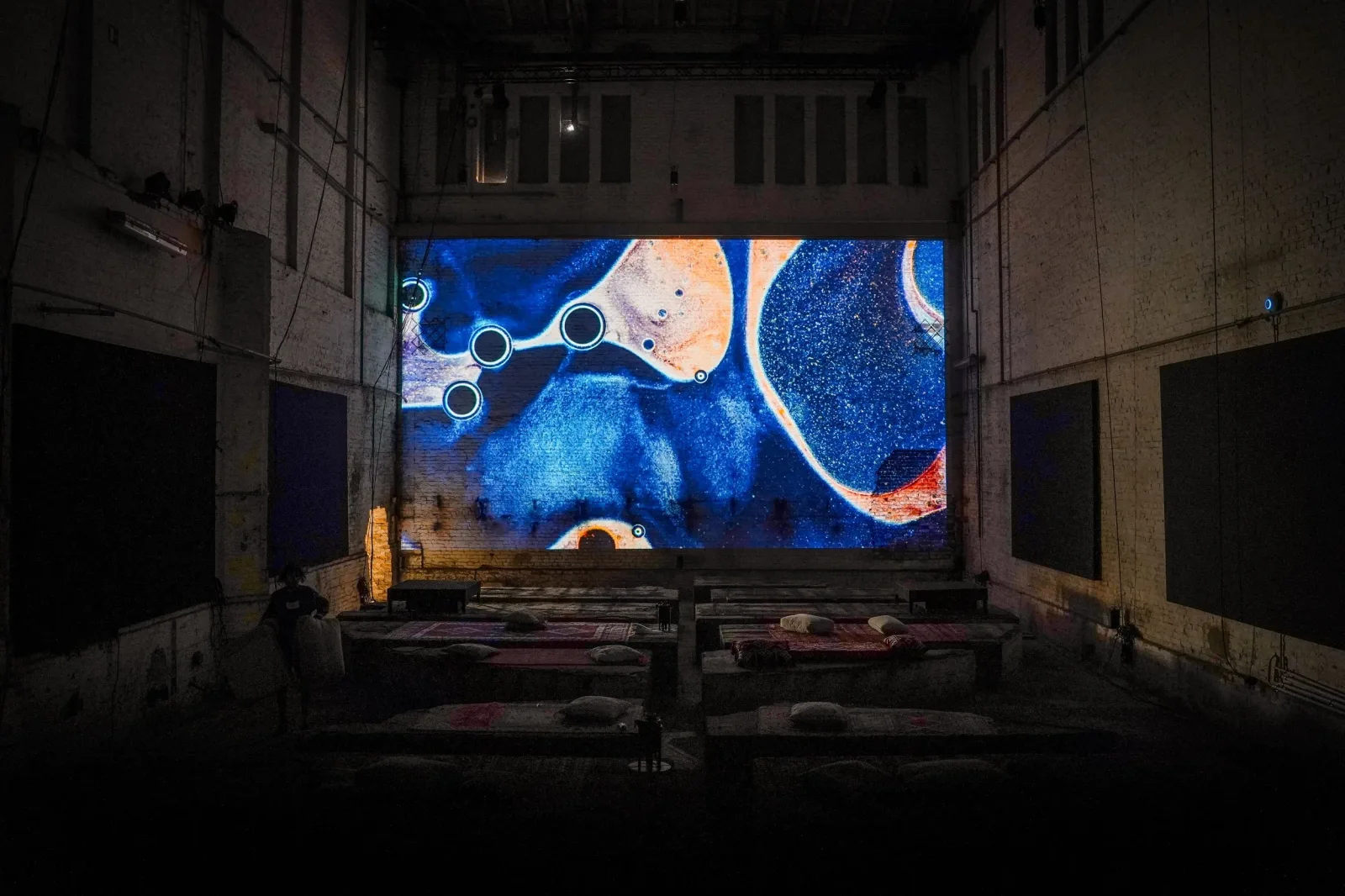
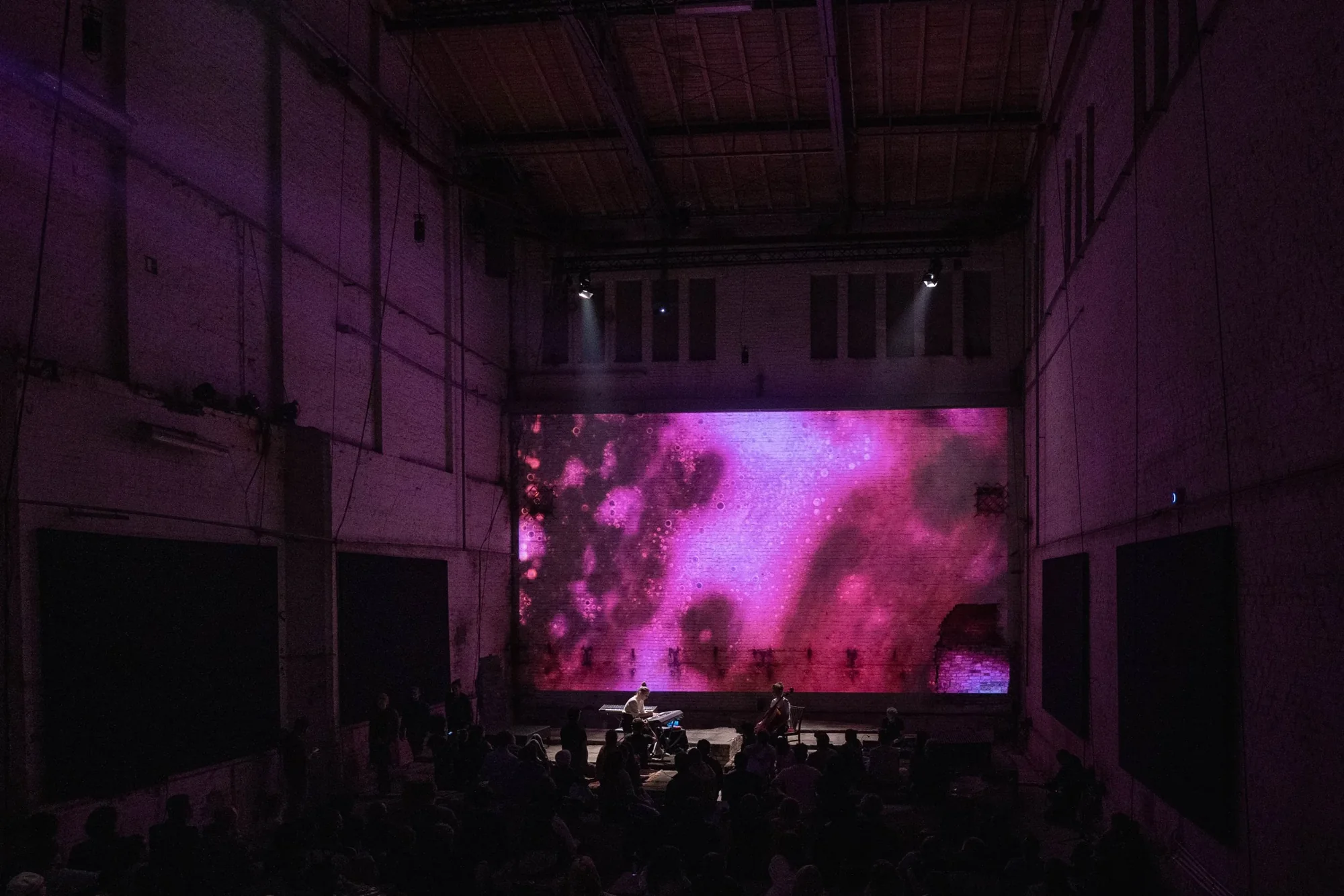
On 26 May 2022, Monopol hosted an immersive audiovisual presentation of The Next Billion Years (Foam and Sand Reworks). The old distillery’s industrial architecture became a vessel for deep listening.
MONOM’s 4DSOUND system and the work of William Russell transformed sound from a flat signal into a spatial presence that moved through the room and changed the audience’s sense of orientation.
07 / The story
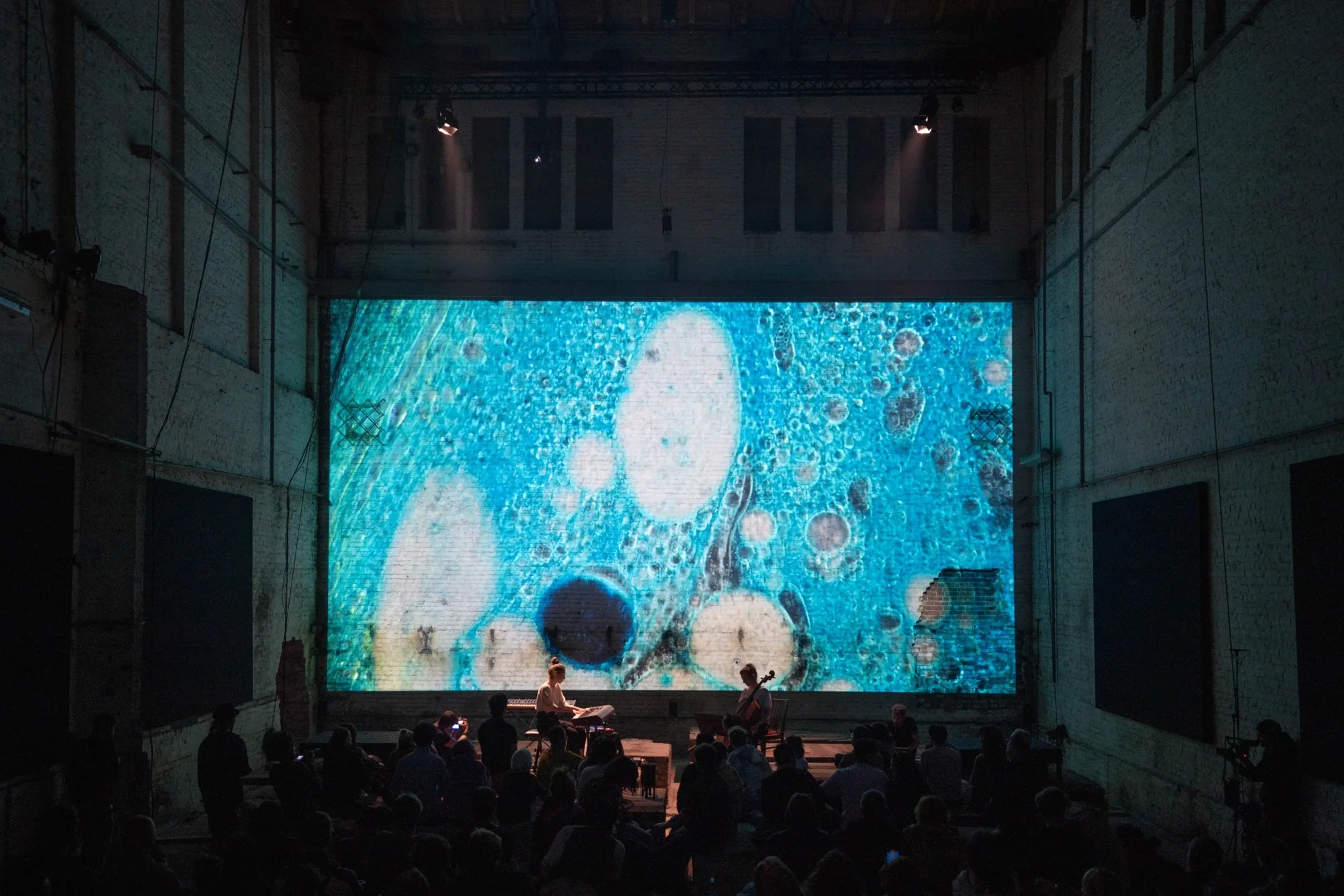
The night opened with a live journey through the microscopic world. With support from YANA and Maria Szagżdowicz, piano and cello formed a human pulse beside the live visual material.
The audience did not need a scientific explanation. The authority came from seeing real textures unfold in real time.
08 / The story
Beauty was understood not as trend or luxury but as a bond: a way of reconnecting people to being alive through music, friendship, the night sky and structures that only become visible under the microscope.
Rather than offering escape, beauty softened the room enough for people to listen and return to their bodies.
09 / The story
On 28 May 2022, the same site became the setting for End of Nations — Aesthetics of the Mind. Sound, light, technology and visual art turned the Monopol bunker into an audiovisual playground.
The Next Billion Years returned in this festival ecosystem as a spatial audiovisual experience with microcosmic visuals. Its distant question became immediate: what kind of future are we building, and how can attention and interdependence survive a culture of fragmentation?
10 / The story
The collaboration holds a central paradox: thinking about a billion years requires humility, while feeling the present requires attention. Robot Koch’s music carries the epic question and the intimate detail; Magnificent Matter’s visuals make the smallest scales feel vast by revealing what is already there.
Spatial sound completed the relationship by making listening physical. The result was not simply a show, but a shared recalibration in which responsibility and wonder could coexist.
11 / The story
After the performance, what remained was the memory of a room that forgot time, the hush before conversation resumed, and the intimacy of microstructures expanding into cosmic landscapes.
The title stayed behind not as prophecy, but as responsibility, awe and an invitation to live differently now. Beauty did not distract from the world; it connected people back to it.
The continuing record
The first Foam and Sand music collaboration, Circle 20, precedes the later concert at Monopol. Keeping those moments distinct reveals how a relationship develops: a film becomes another opportunity to work together, with a new space, sound system and audience.
From the original film archive
Early music collaboration. Separate from the later Robot Koch / Monopol concert.
30.0 s · source excerptOriginal publisher / external links
The wider practice
Working together
Related work