
Echoes in Orbit with Sofi Paez & Tara Nome Doyle
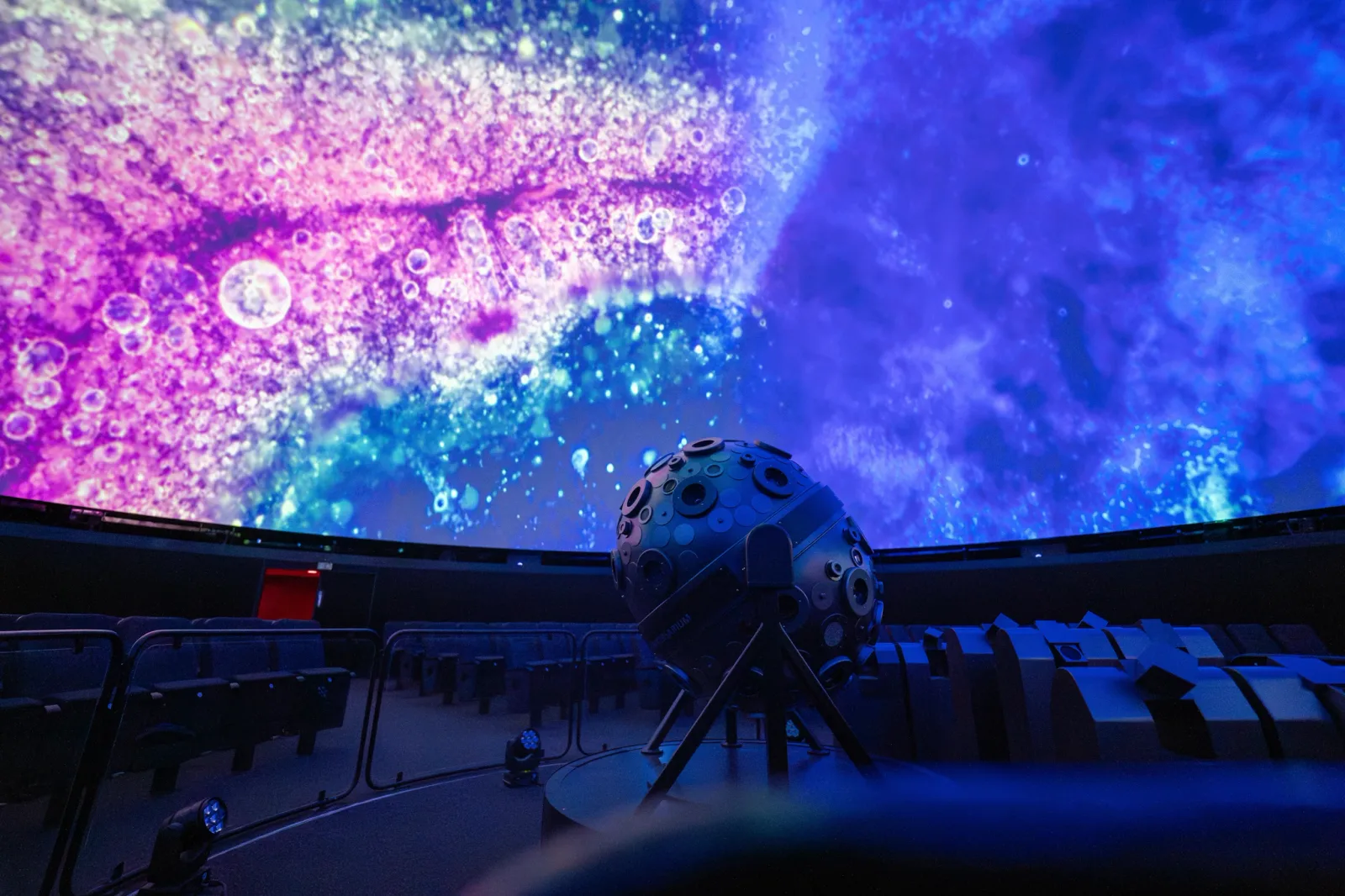
A live fulldome performance at Zeiss-Großplanetarium Berlin that expands real-time microscopic processes into an immersive visual field, accompanied by live music from Sofi Paez and Tara Nome Doyle.
- Format
- Live / Experience
- Status
- Completed
- Context
- Live / Experience
A Hidden World Expands
Echoes in Orbit began with a shift in scale.
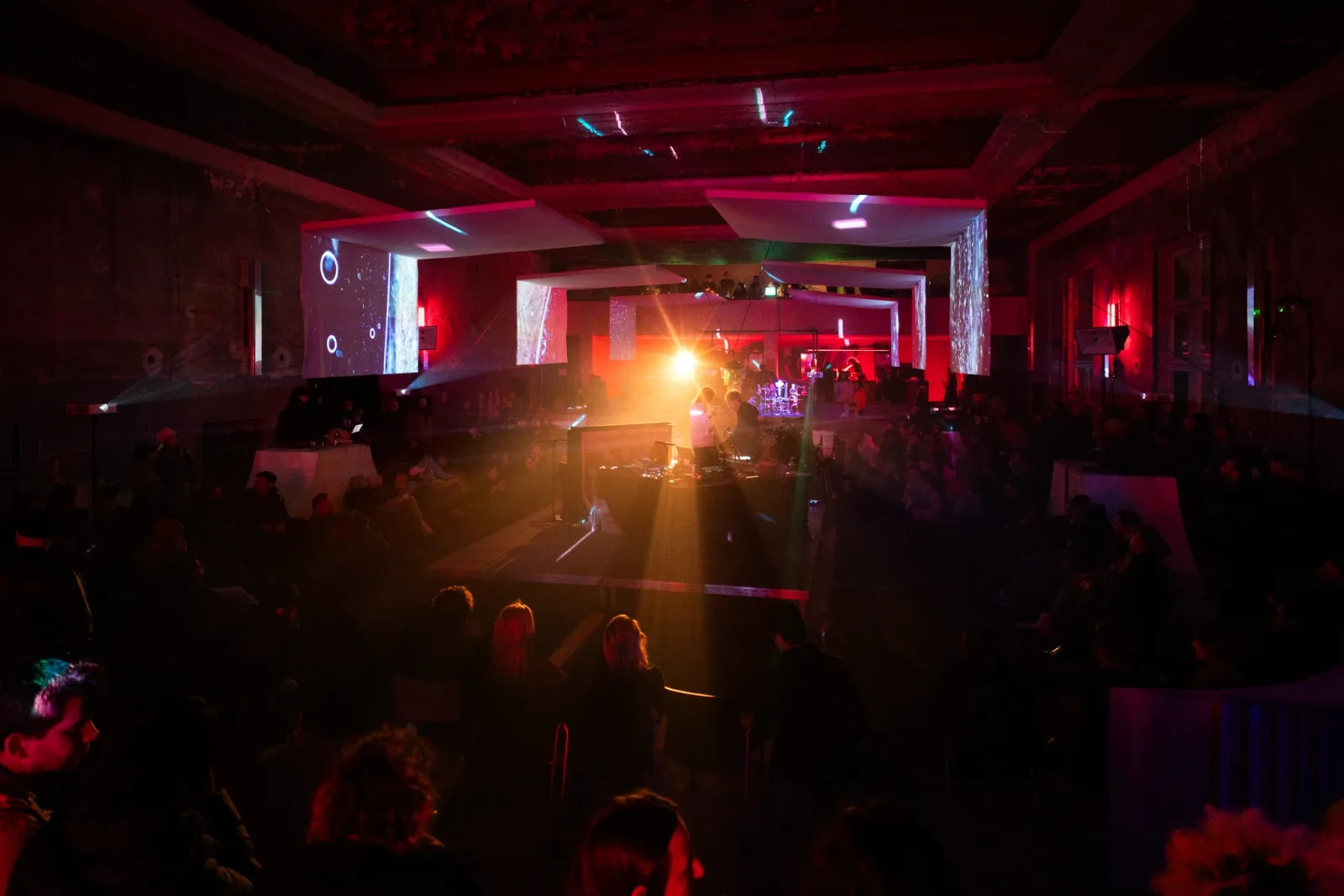
Processes usually confined to a microscope slide were expanded across the dome of the Zeiss-Großplanetarium Berlin, transforming movements barely visible to the human eye into an immersive environment of light, matter and sound.
Liquids merged. Particles drifted. Structures formed, fractured and disappeared. What might ordinarily be observed through an eyepiece became a living field surrounding the audience.
At this scale, matter no longer appeared static or contained. It revealed itself as something continuously becoming — unstable, responsive and alive with forces that usually remain beyond perception.
The microscope was not used simply to document these phenomena. It became an instrument for live image-making.
Using a ZEISS Axioscope 7, microscopic processes were captured and translated directly into the fulldome environment. Every visual unfolded in real time. Nothing was rendered in advance or repeated in exactly the same way.
This live approach preserved the behaviour of the materials themselves. The imagery could be guided, but never fully controlled. Each change in pressure, temperature, liquid or light introduced new movements and unexpected forms.
The performance therefore emerged through observation rather than execution. It was shaped by the tension between intention and chance — between what could be prepared and what matter decided to reveal in the moment.
Inside the dome, these subtle processes became vast. A drifting particle could resemble a distant body in space. A crystallising surface could unfold like an unfamiliar landscape. The microscopic and the cosmic began to mirror one another, not because they were made to look alike, but because both resist any stable sense of scale.
Echoes in Orbit invited the audience to enter that uncertainty.
Sound Moves Through Matter
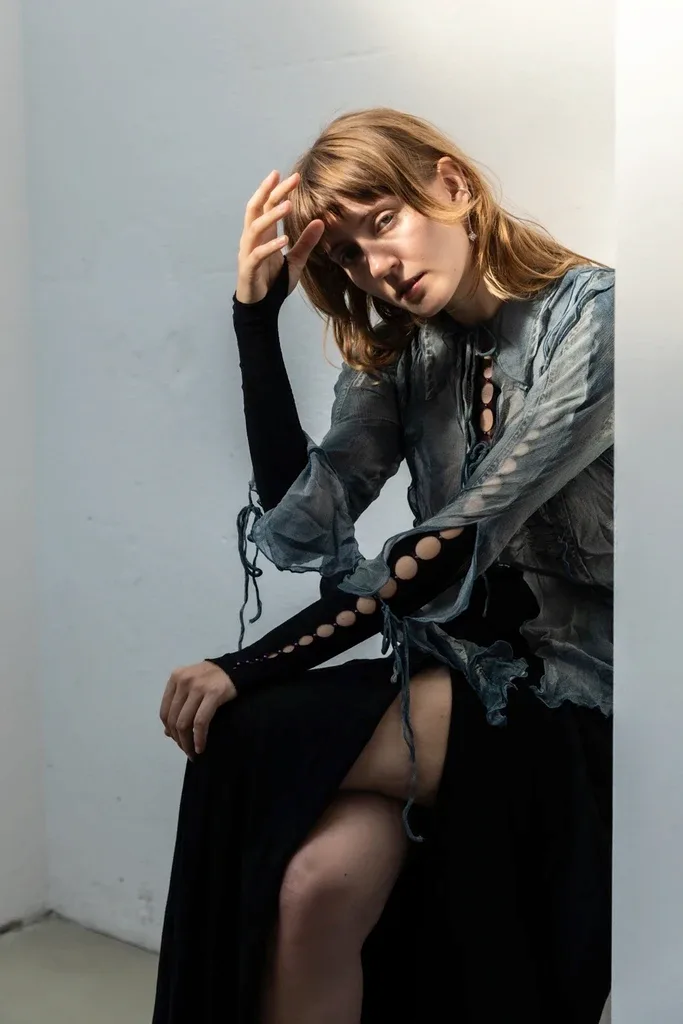
The visual world was accompanied live by Sofi Paez and Tara Nome Doyle.
Their music did not explain the images or attempt to dictate how they should be understood. It moved beside them, creating an emotional and temporal space in which sound and matter could influence one another without becoming inseparable.
Piano, voice and restrained electronic textures opened a close and attentive listening field. Moments of fragility expanded into intensity, while dense passages dissolved again into stillness.
The relationship between the musicians and the imagery remained open.
At times, sound and image appeared to move as one. At others, they followed separate rhythms, allowing tension, distance and coincidence to emerge between them. A visual transformation could arrive before its musical counterpart. A voice could linger after an image had already disappeared.
This looseness was central to the performance.
Rather than synchronising every moment, Echoes in Orbit created room for each medium to retain its own logic. The microscopic material responded to physical conditions. The music responded to atmosphere, time and one another. Meaning emerged through their encounter.
The dome became more than a projection surface or concert venue. It became a shared instrument.
Images moved across its architecture while sound travelled through the room, dissolving the separation between stage and audience. Viewers were not positioned in front of the work, but inside it — held between the intimacy of a live performance and the vastness of the surrounding visual field.
The collaboration also continued relationships that had developed across earlier projects and places. But Echoes in Orbit was not simply the continuation of existing work. It allowed those relationships to change through a new scale, a new spatial language and a new form of collective attention.
Each person entered with a distinct practice. Together, they created something that belonged fully to none of them alone.

Learning to Look Again
Echoes in Orbit existed somewhere between concert, laboratory and cinematic space.
It did not present the microscopic world as scientific evidence to be interpreted, nor as a visual effect detached from the processes that produced it. Instead, it created time and space for sustained observation.
The audience was invited to remain with processes that had no clear beginning, climax or resolution.
Forms emerged slowly. Small changes accumulated. Images that initially appeared abstract began to reveal patterns, textures and behaviours. Attention shifted away from the search for immediate meaning and toward the act of watching itself.
This slowness was not passive.
It asked the audience to become sensitive to movements that are usually overlooked: the gradual separation of liquids, the growth of crystalline edges, the pull between particles, the moment a structure loses its stability and becomes something else.
Through magnification, the familiar became strange. Through immersion, the distant became intimate.
The performance did not attempt to make the invisible fully understandable. Its power came from preserving some of its mystery.
For a limited time, scientific imaging became a shared perceptual space — not only a way of analysing matter, but a way of encountering it together.
Echoes in Orbit suggested that observation can be more than the extraction of knowledge. It can also be a form of closeness.
By allowing audiences to inhabit processes that would otherwise remain hidden, the work created a different relationship to scale, time and material life. The microscope no longer separated the observer from the specimen. The dome opened that encounter outward, turning a private act of looking into a collective experience.
What remained was not a single image or conclusion, but a heightened awareness of the worlds already moving around and within us.
- Venue and fulldome presentation — Zeiss-Großplanetarium Berlin
- Planetarium Berlin
- Live music — piano, voice and subtle electronic textures
- Sofi Paez
- Live music — voice and cinematic atmosphere
- Tara Nome Doyle
- Microscopy technology — ZEISS Axioscope 7
- ZEISS Microscopy
Continue the exploration.
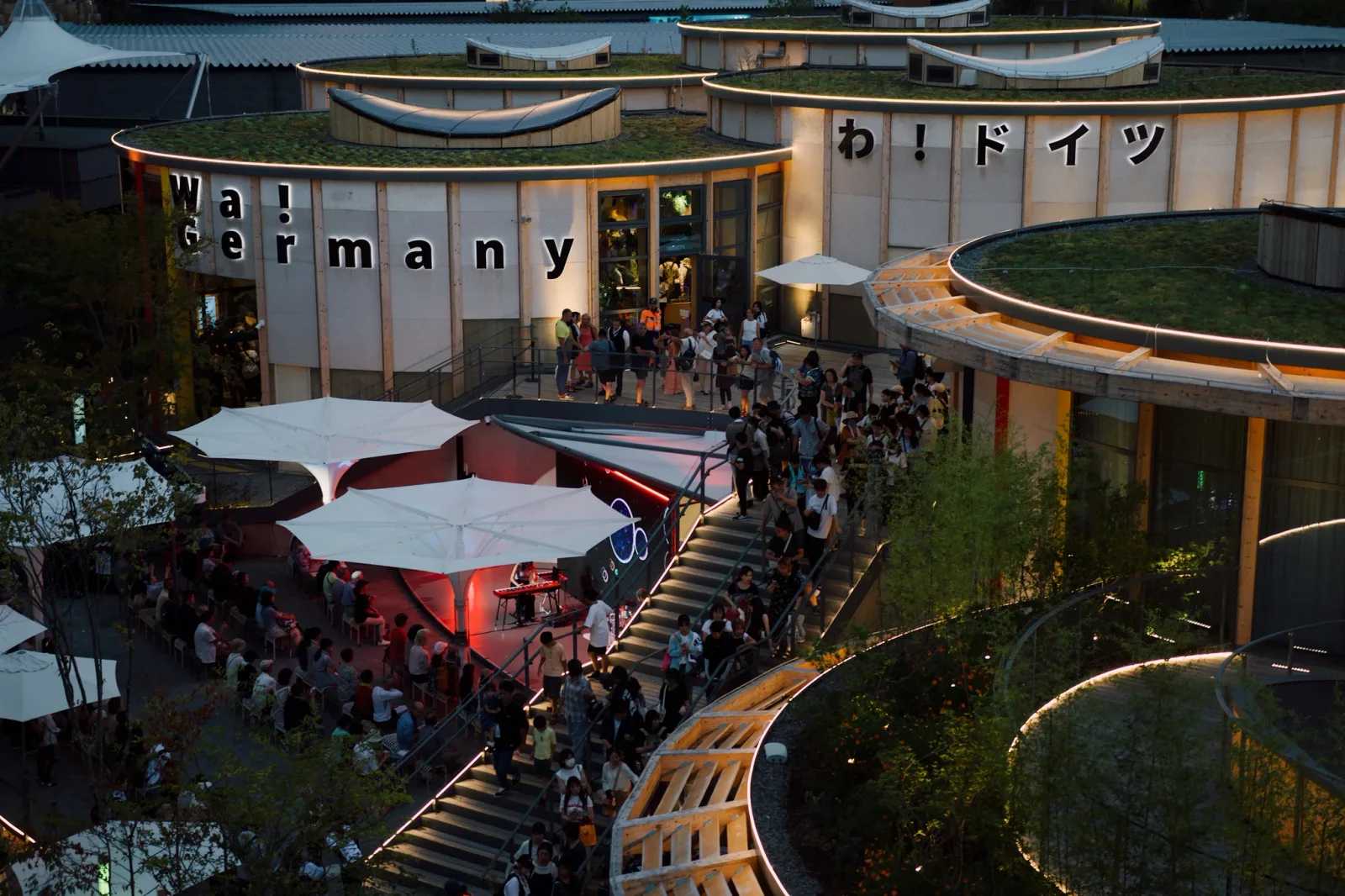
EXPO25 with Sofi Paez & ZEISS Microscopy
Live / Experience
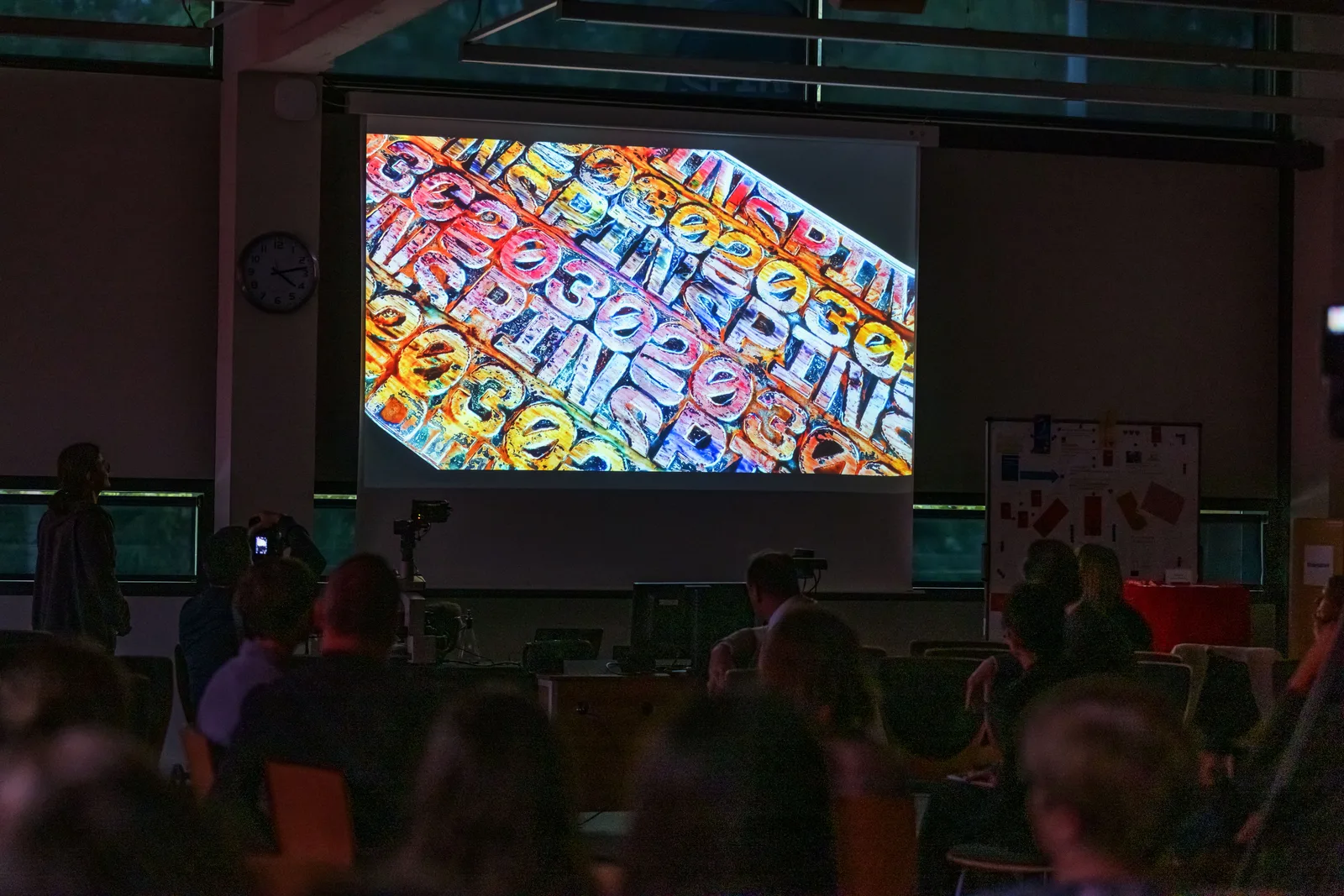
SPIN2030
Live / Experience
Encounters at 1-06
Live / Experience