
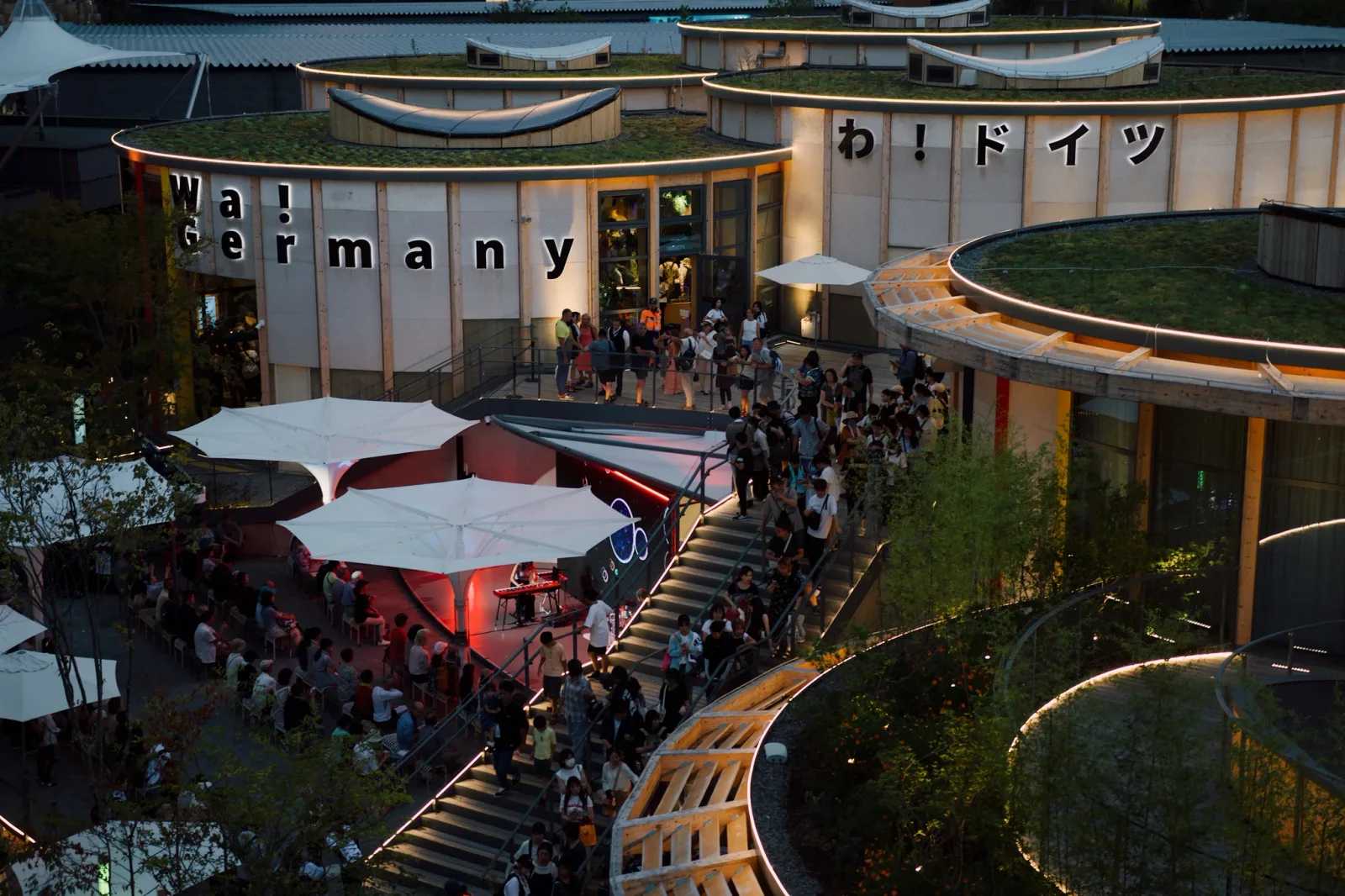
EXPO25 with Sofi Paez & ZEISS Microscopy
A five-day live performance residency on the Cultural Stage of the German Pavilion at Expo 2025 Osaka, combining Magnificent Matter’s live microscopy with piano and voice by Sofi Paez.
- Format
- Live / Experience
- Status
- Completed
- Context
- Live / Experience
Building a Shared Language
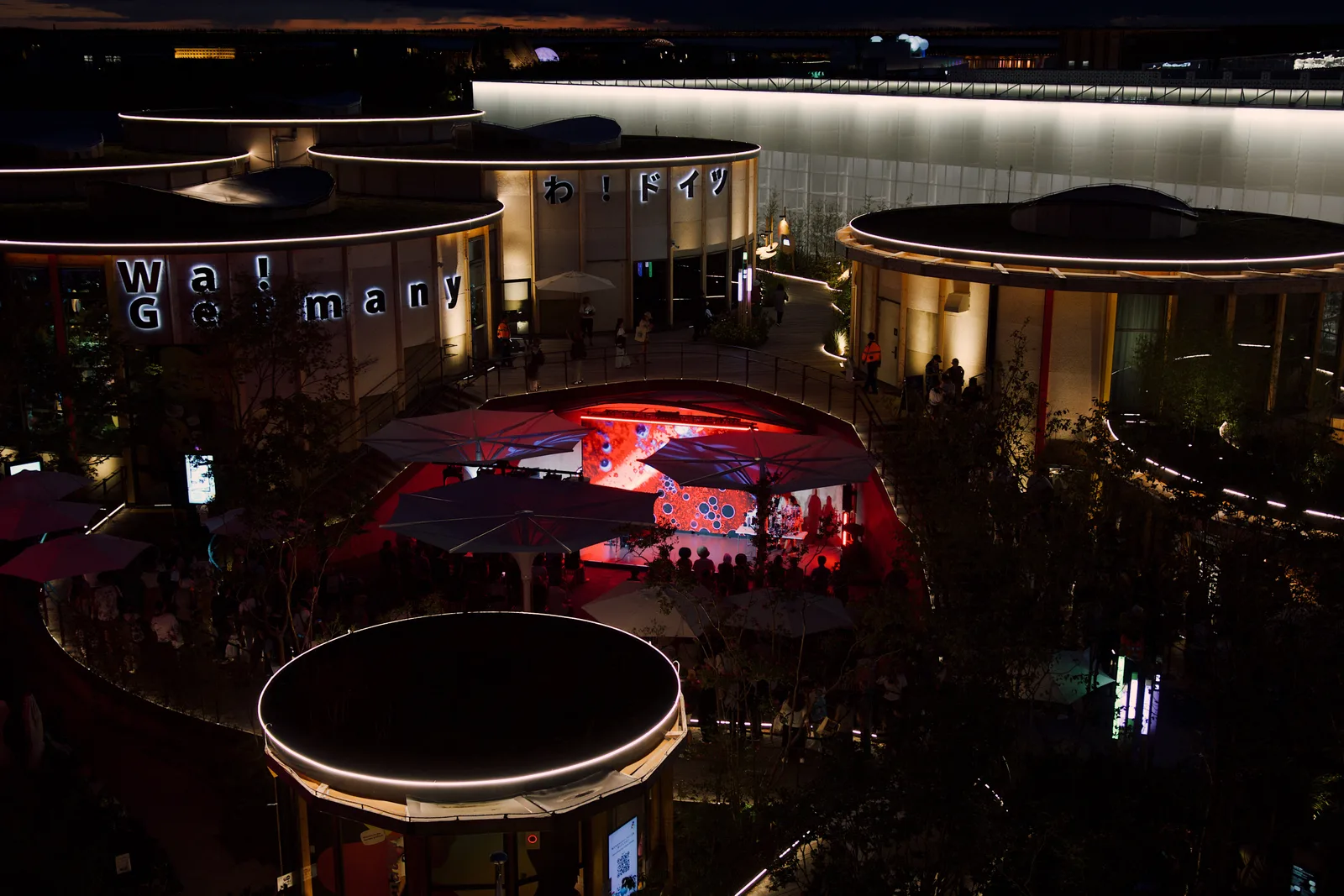
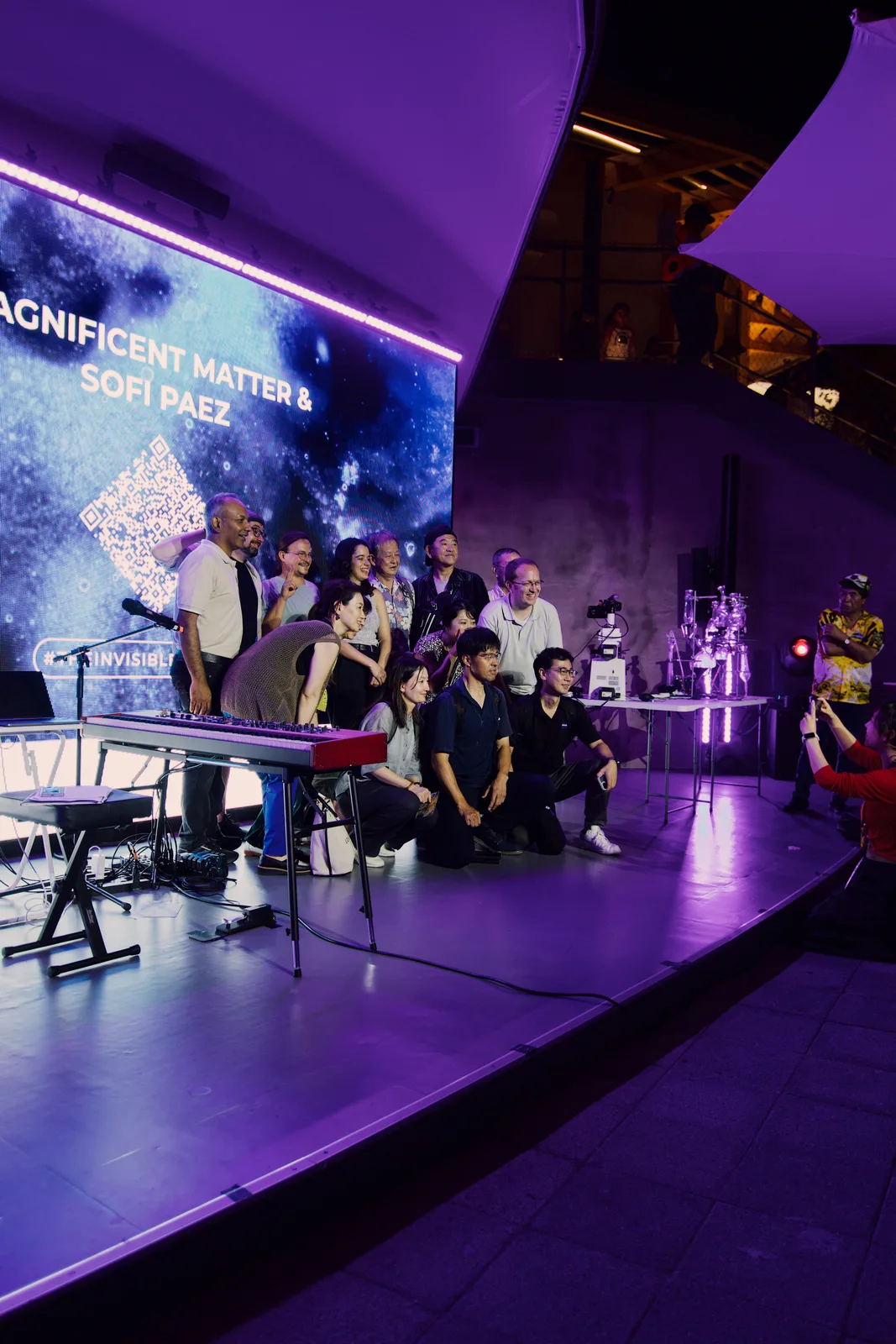
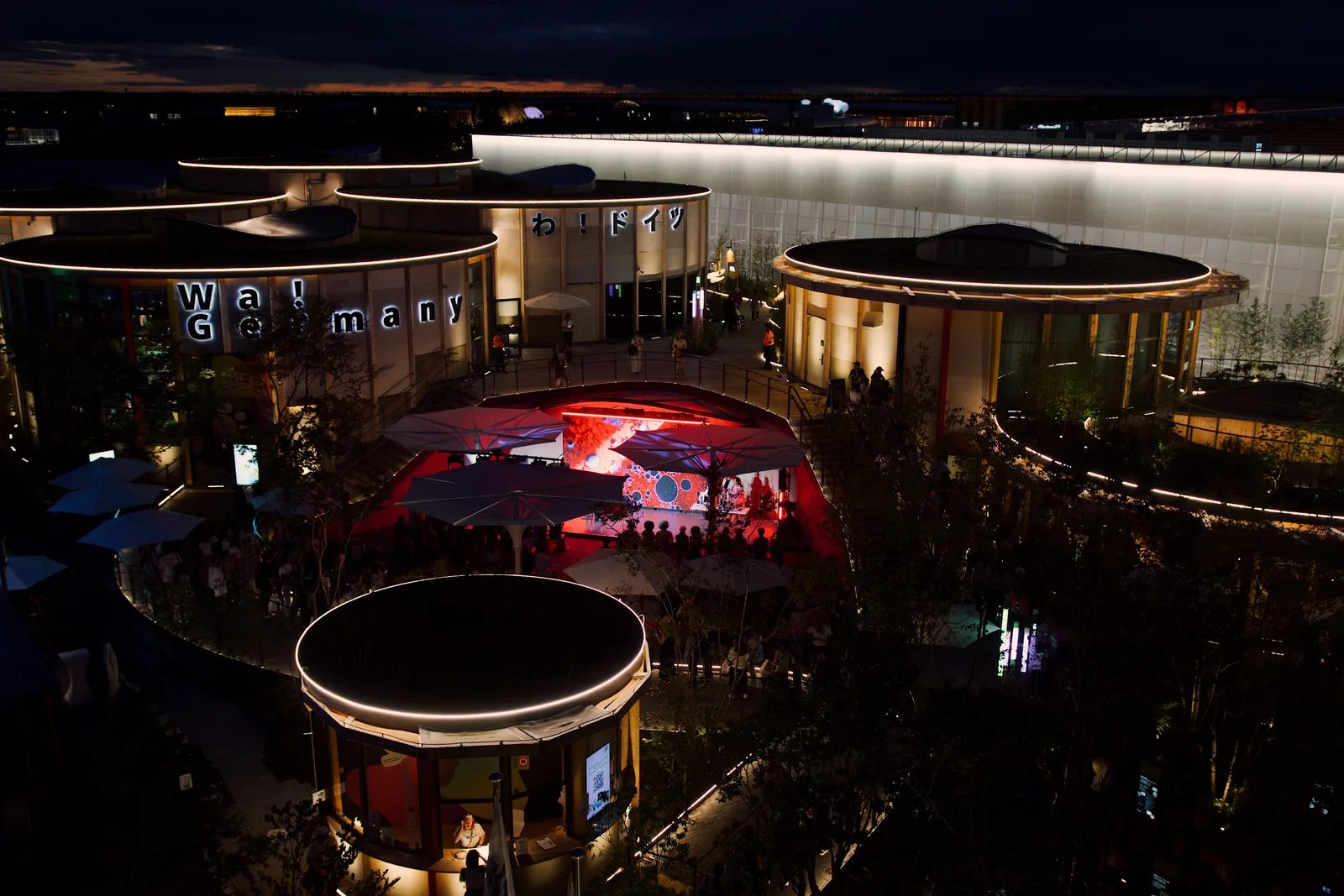
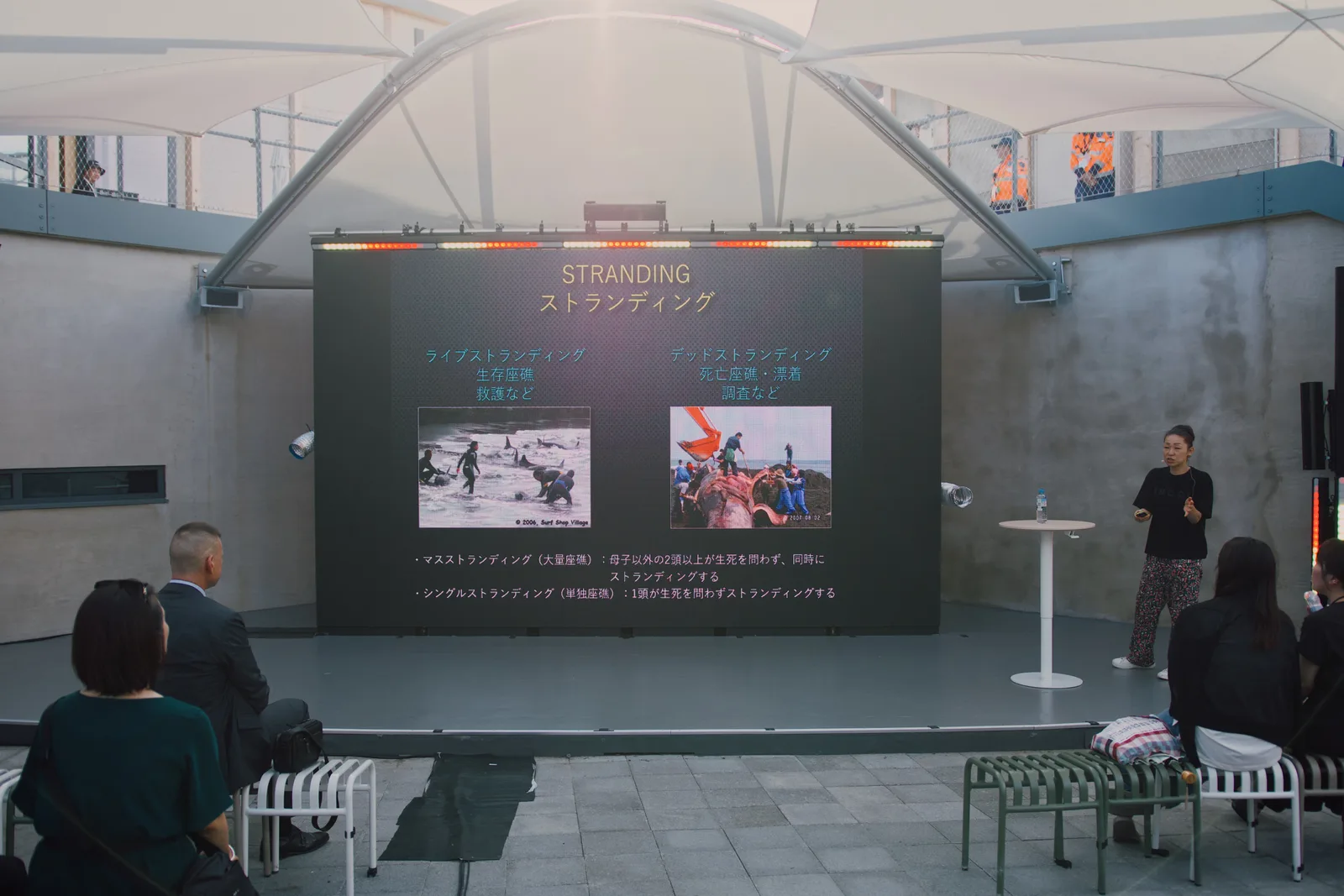
In September 2025, live microscopic worlds appeared on the Cultural Stage of the German Pavilion at Expo Osaka.
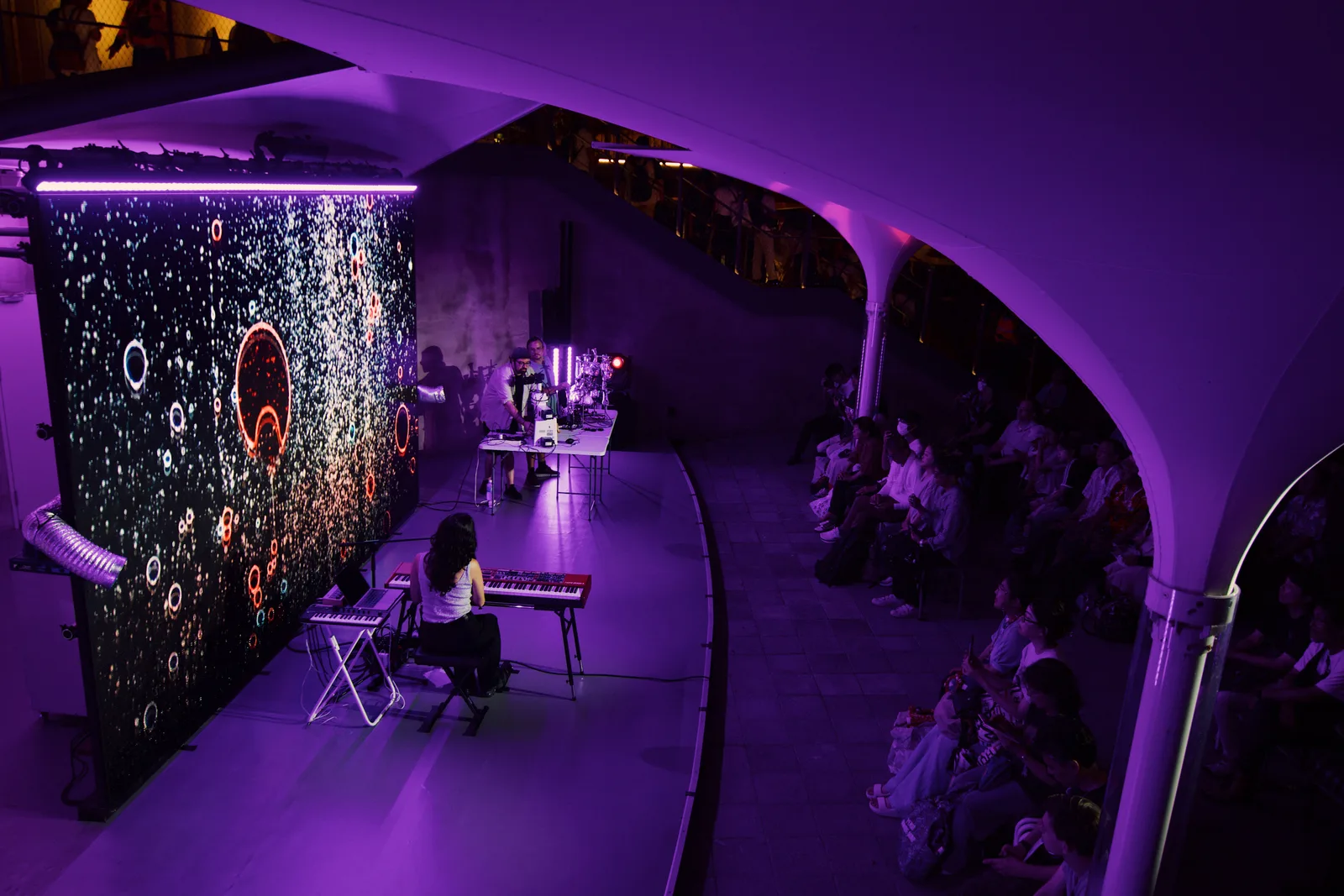
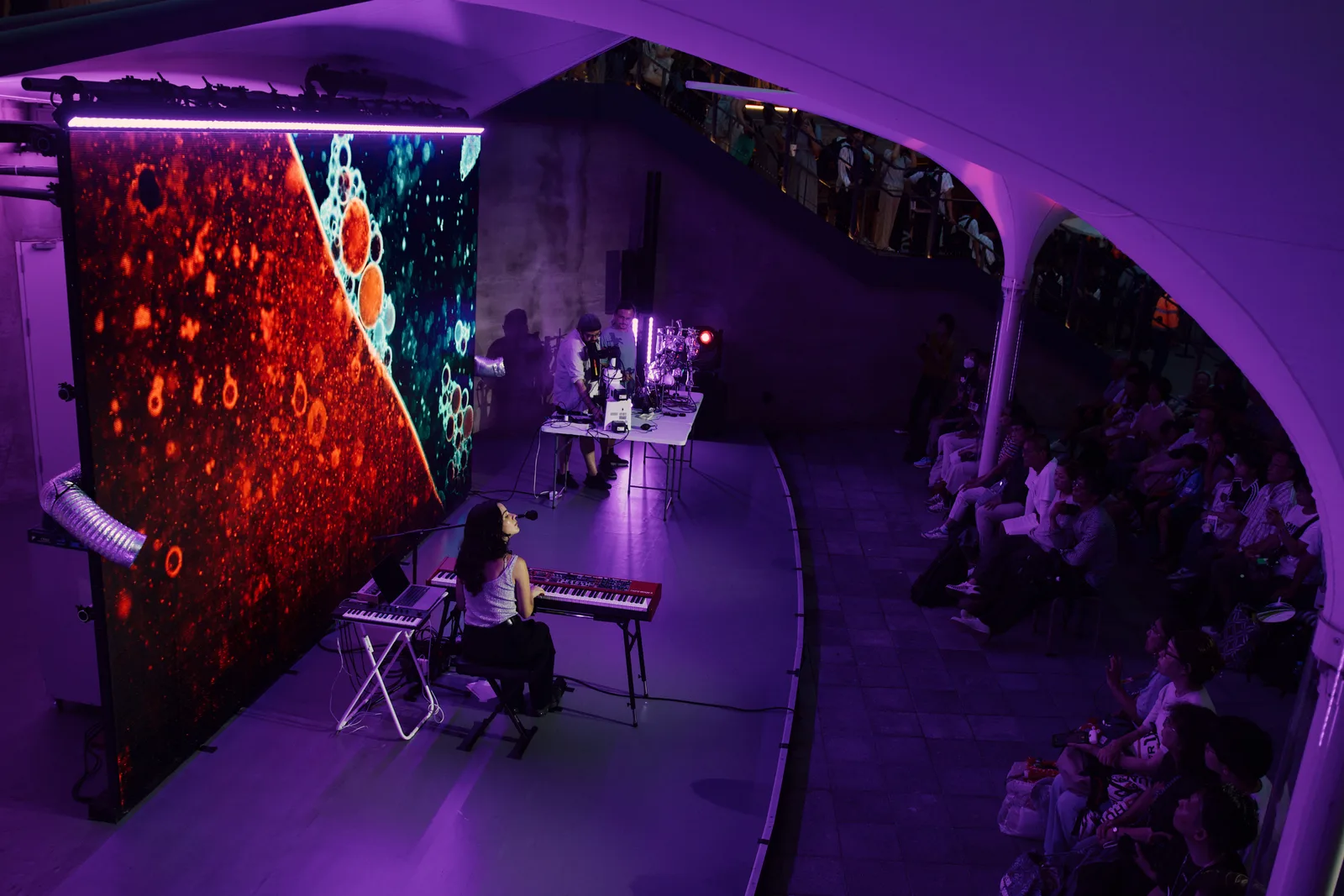
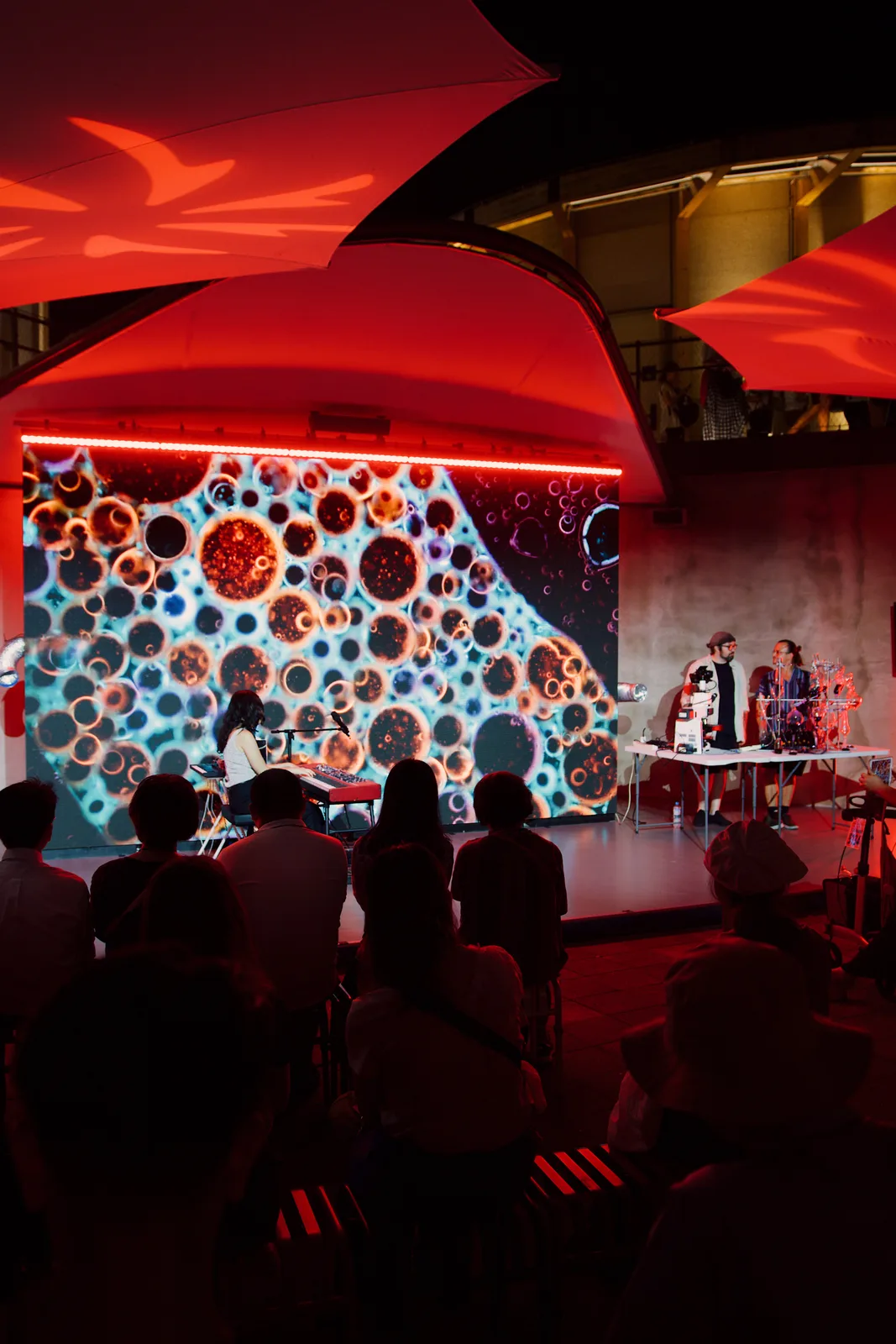
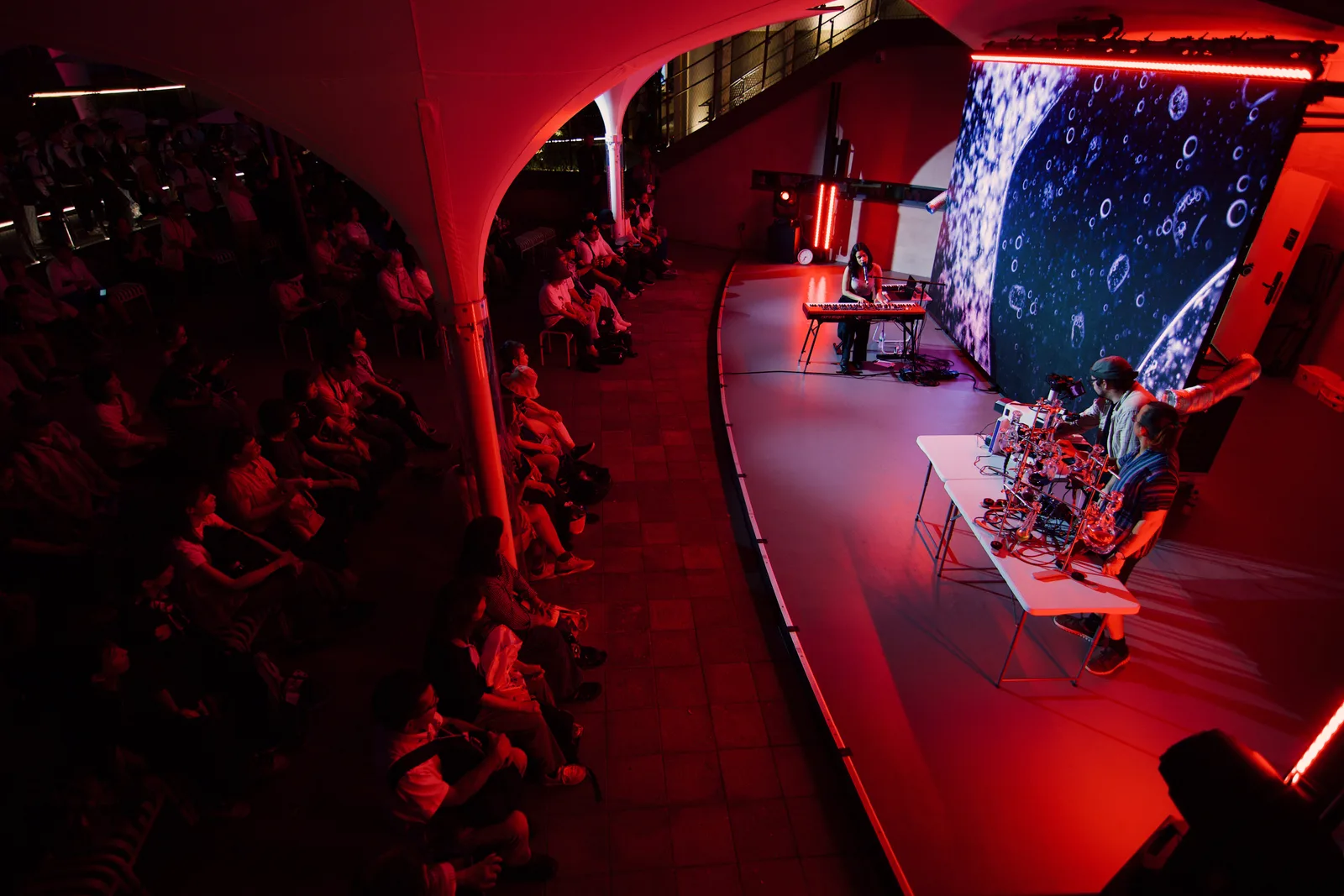
For five days, Magnificent Matter and pianist and composer Sofi Paez transformed processes normally confined to a microscope slide into expansive moving landscapes. Liquids merged, pigments drifted, boundaries formed and dissolved, while piano, voice and subtle electronics created the time and space to observe them.
The performance was the visible result of a much longer collaboration with ZEISS.
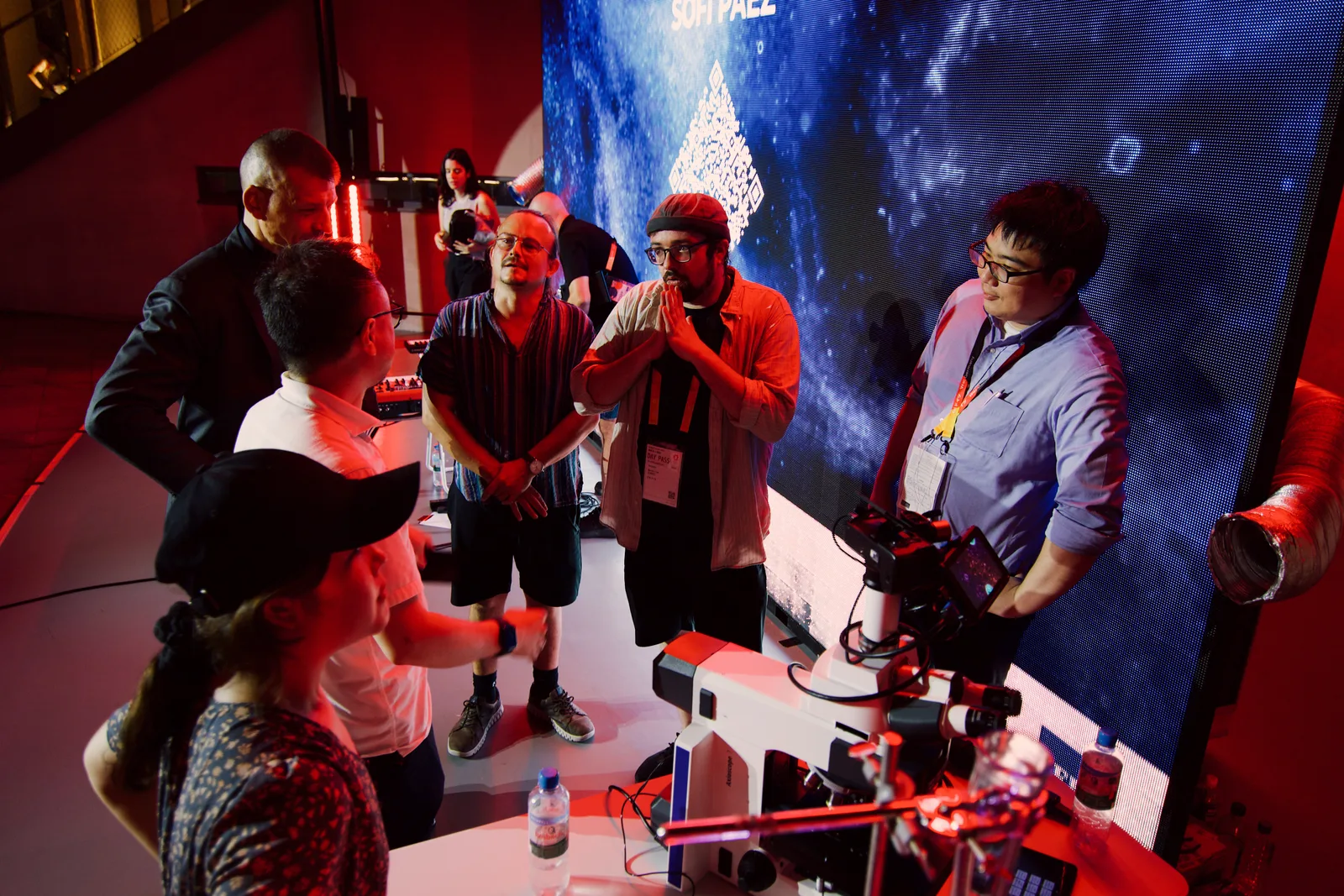
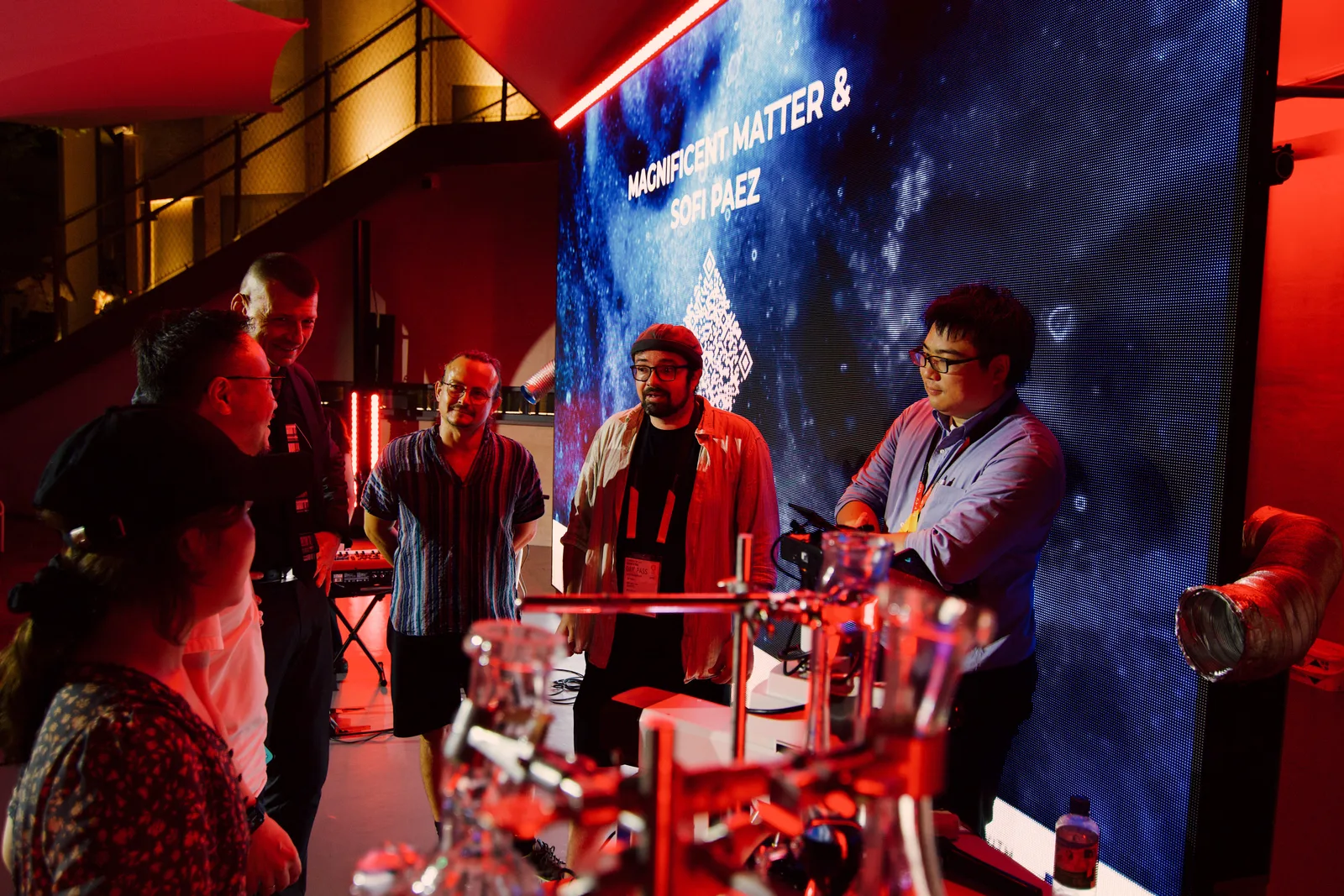
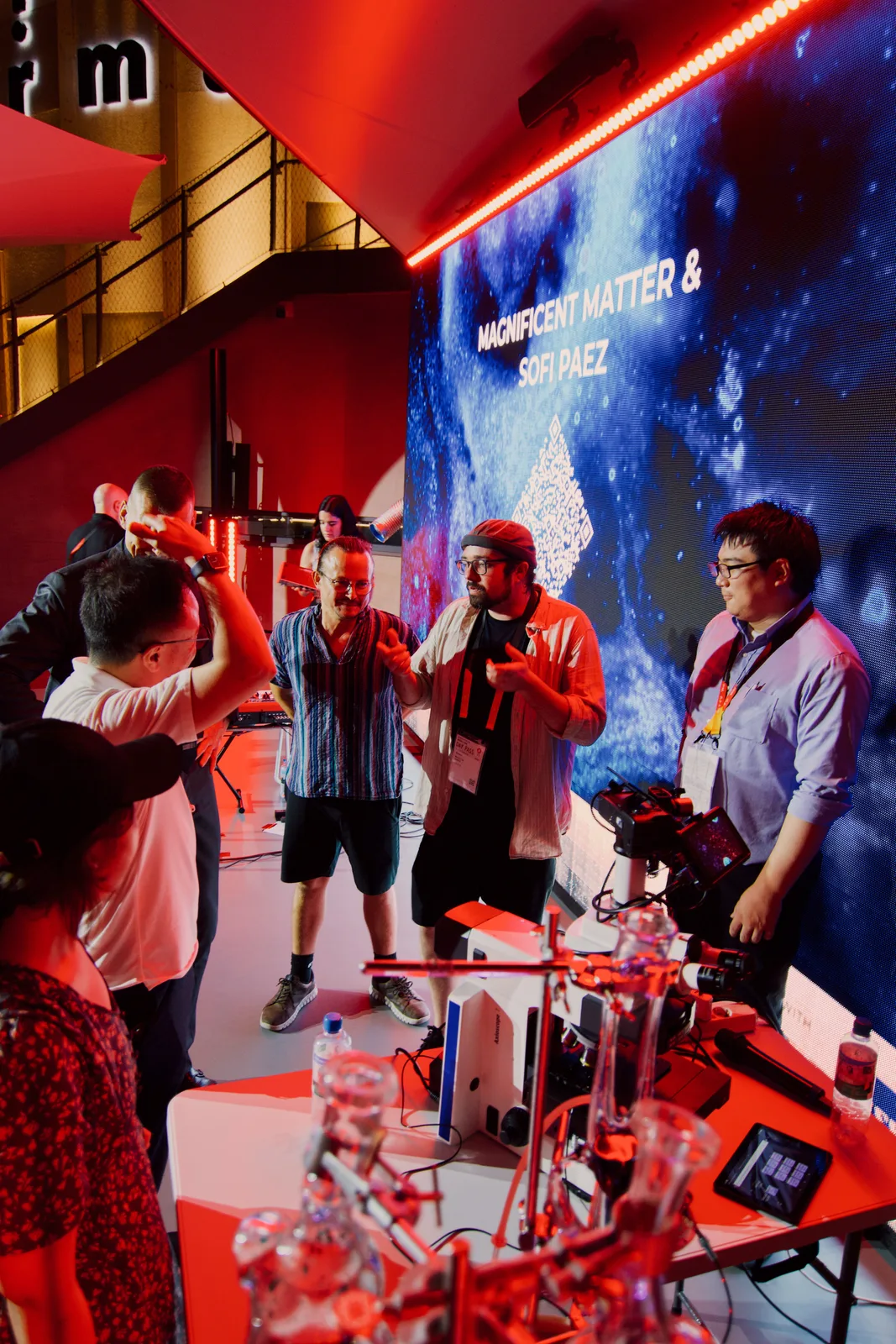
It began not simply with access to a microscope, but with the gradual development of a shared language between artistic experimentation, scientific precision and international production. Magnificent Matter visited the ZEISS headquarters in Jena to work closely with the technology, understand the instrument and explore how a scientific imaging system could function in a live cultural context.
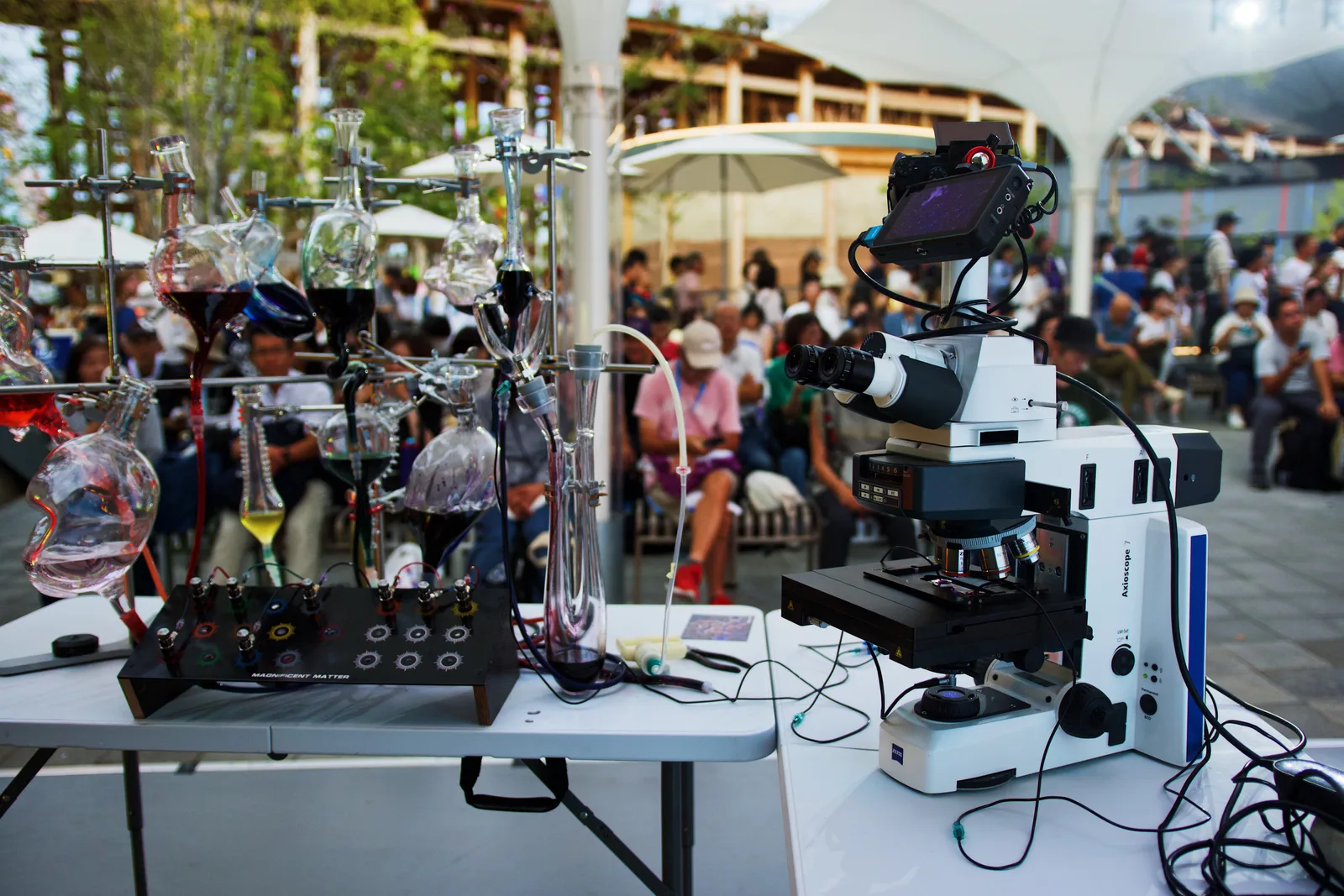
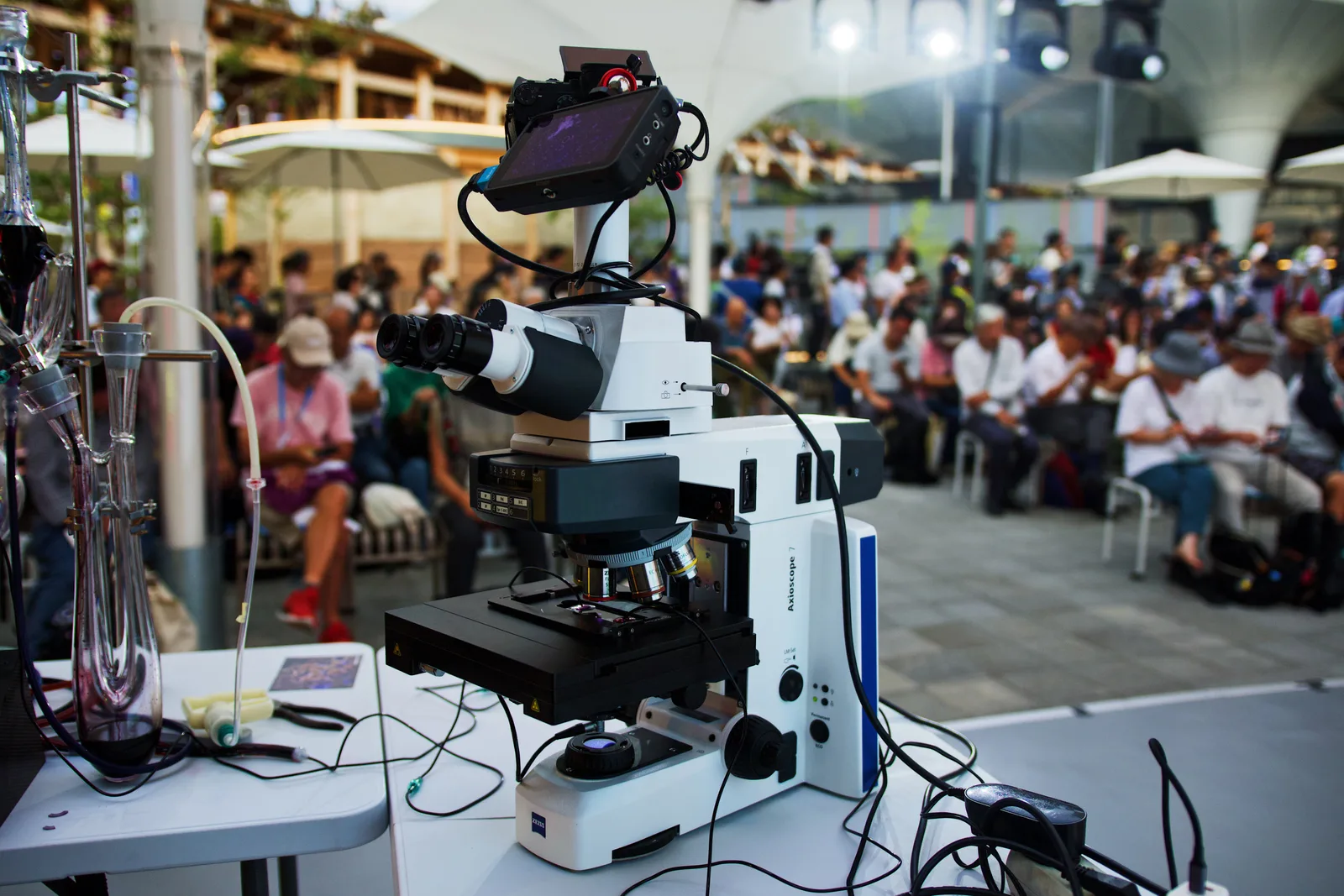
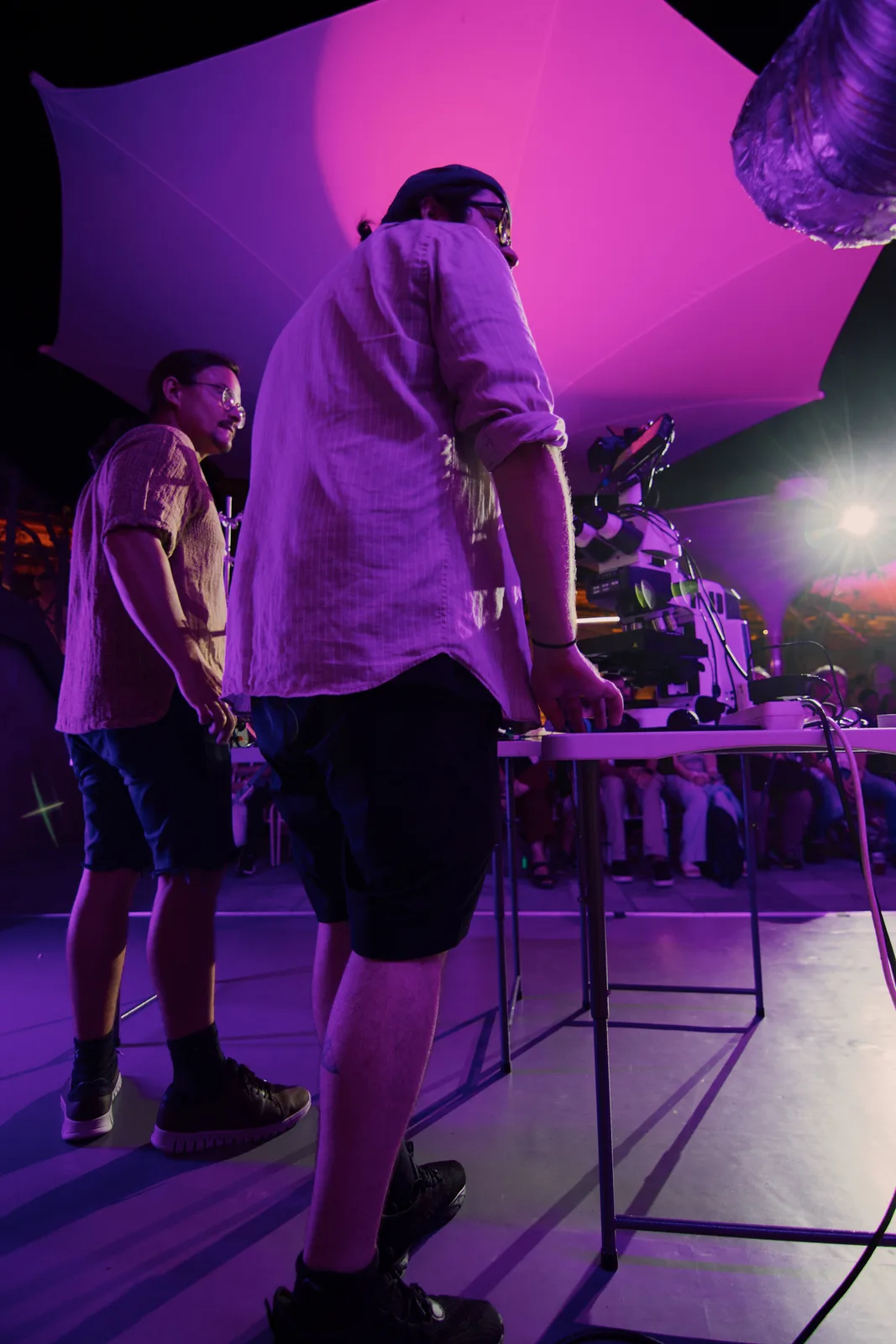
The ZEISS Axioscope 7 was approached with the same care as any other collaborator. Its optical possibilities had to be understood, but so did its limits. The aim was not to use microscopy as a visual effect. It was to preserve the clarity, integrity and unpredictability of the processes taking place under the lens.
From there, the project grew through a much wider team. Microscopy specialists, producers, technical crews, cultural partners, artists and communication teams worked across Germany and Japan to shape a live format that could represent ZEISS on the stage of the German Pavilion.
What eventually appeared as a quiet encounter between image and sound was supported by a large network of people working toward the same goal: to translate scientific precision into a shared cultural experience.
The performance was only the visible layer of that collective process.
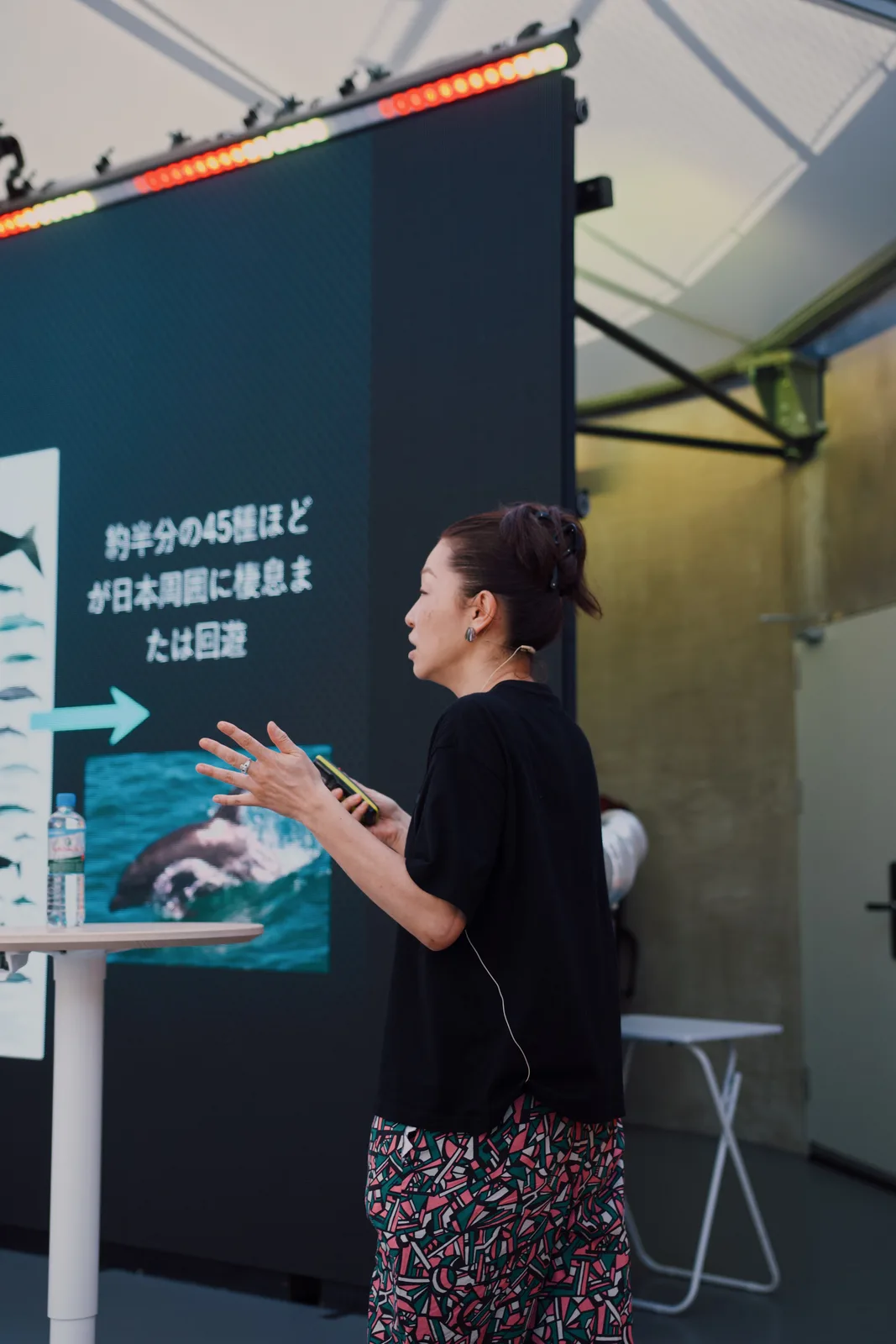
From Scientific Instrument to Live Environment
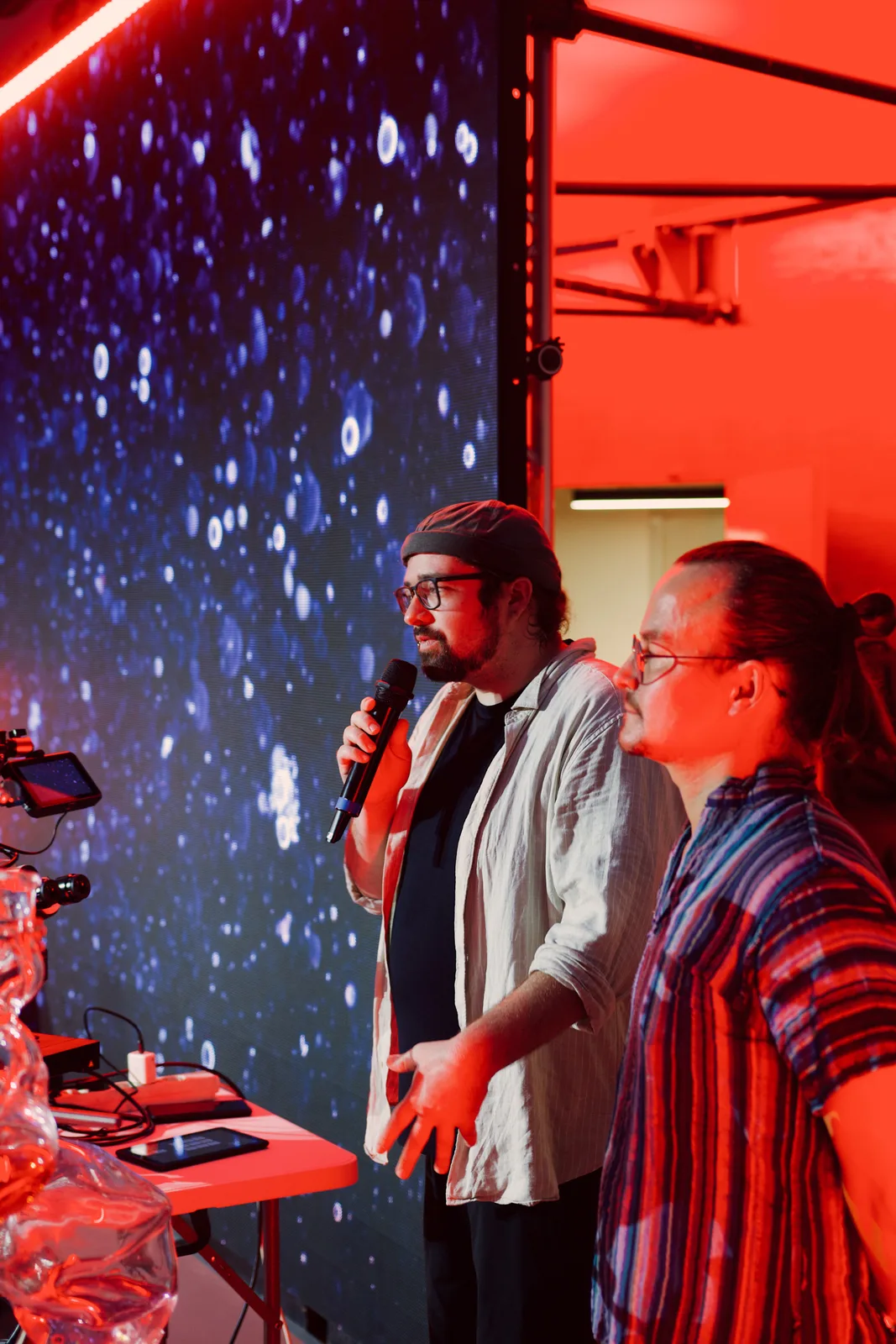
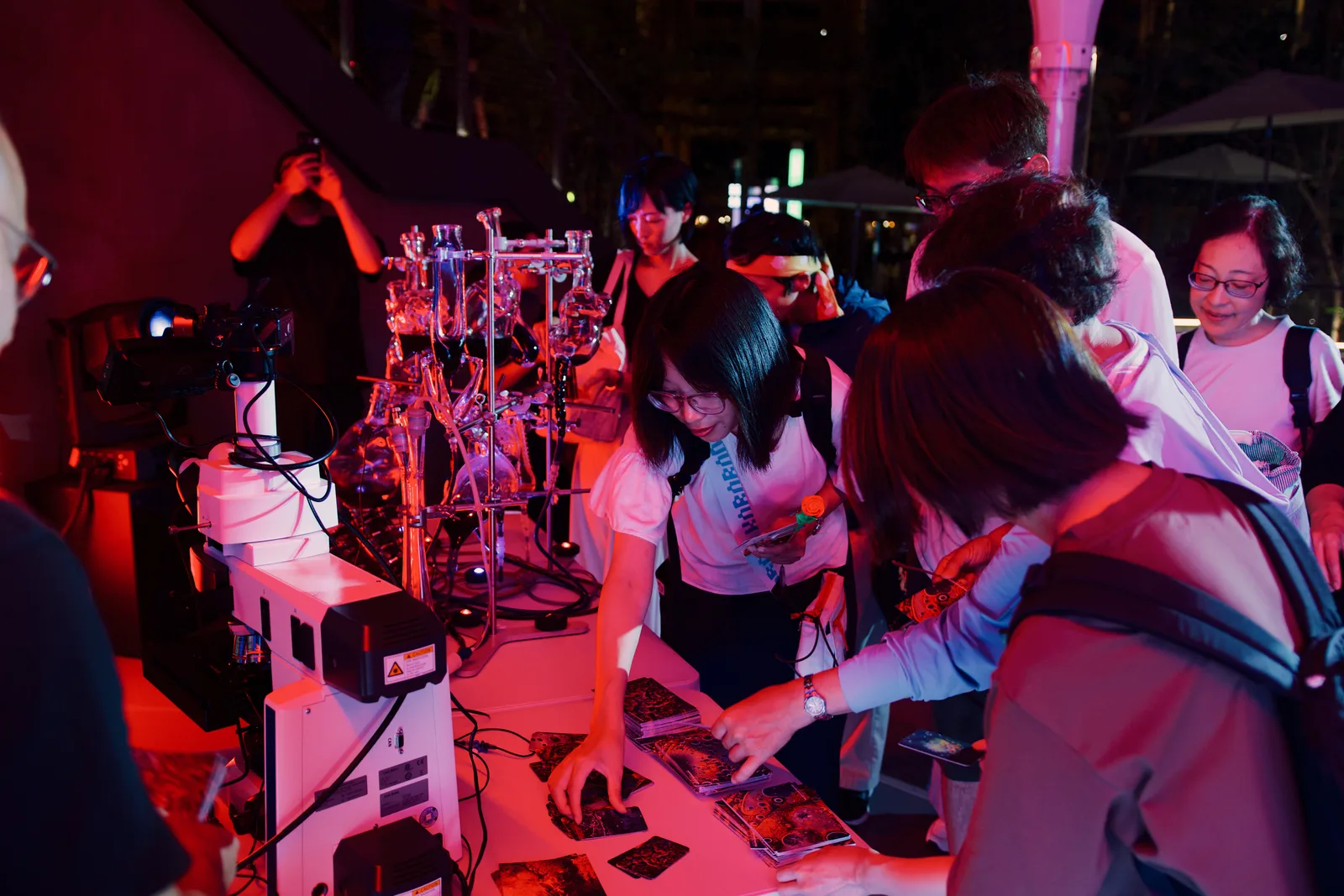
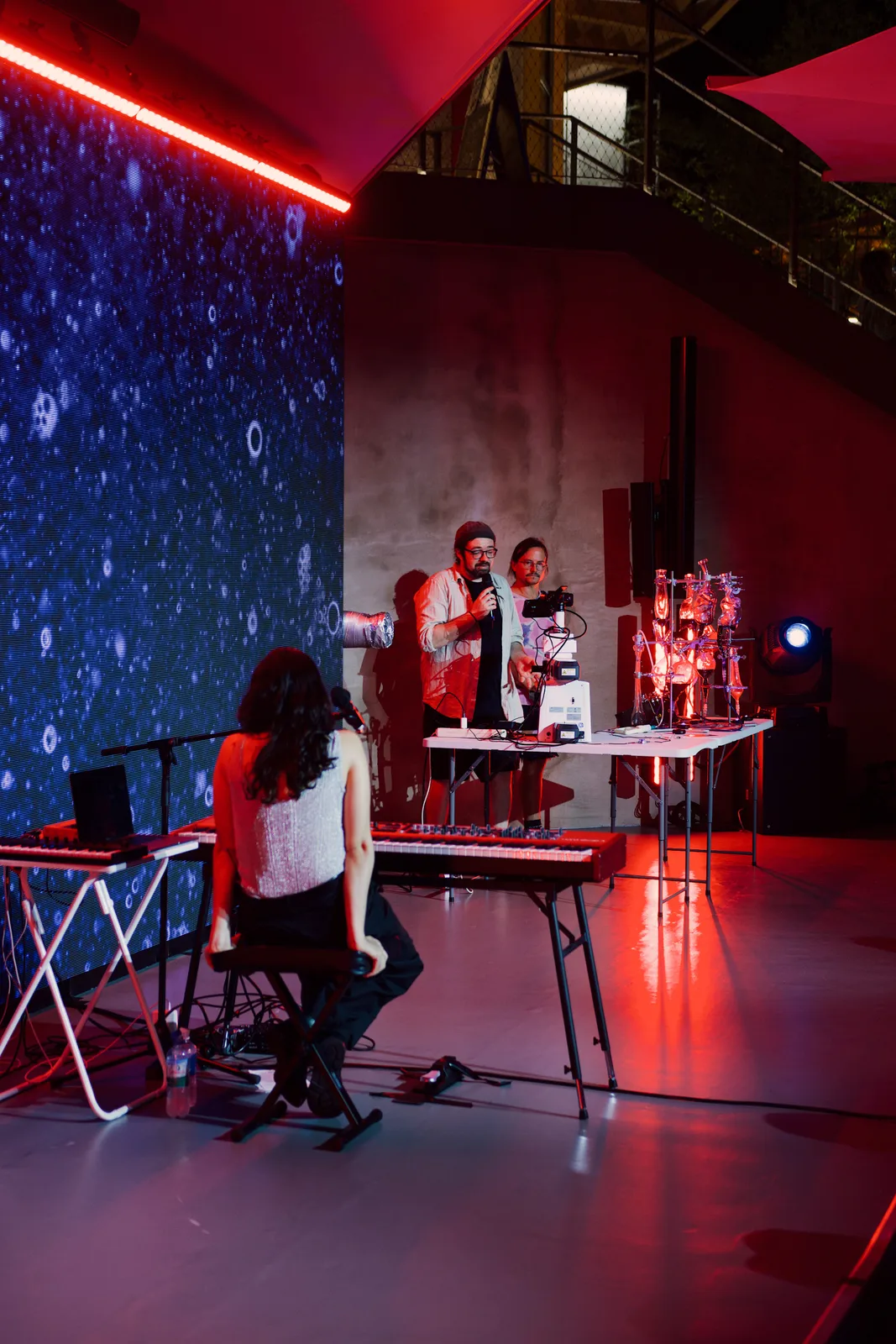
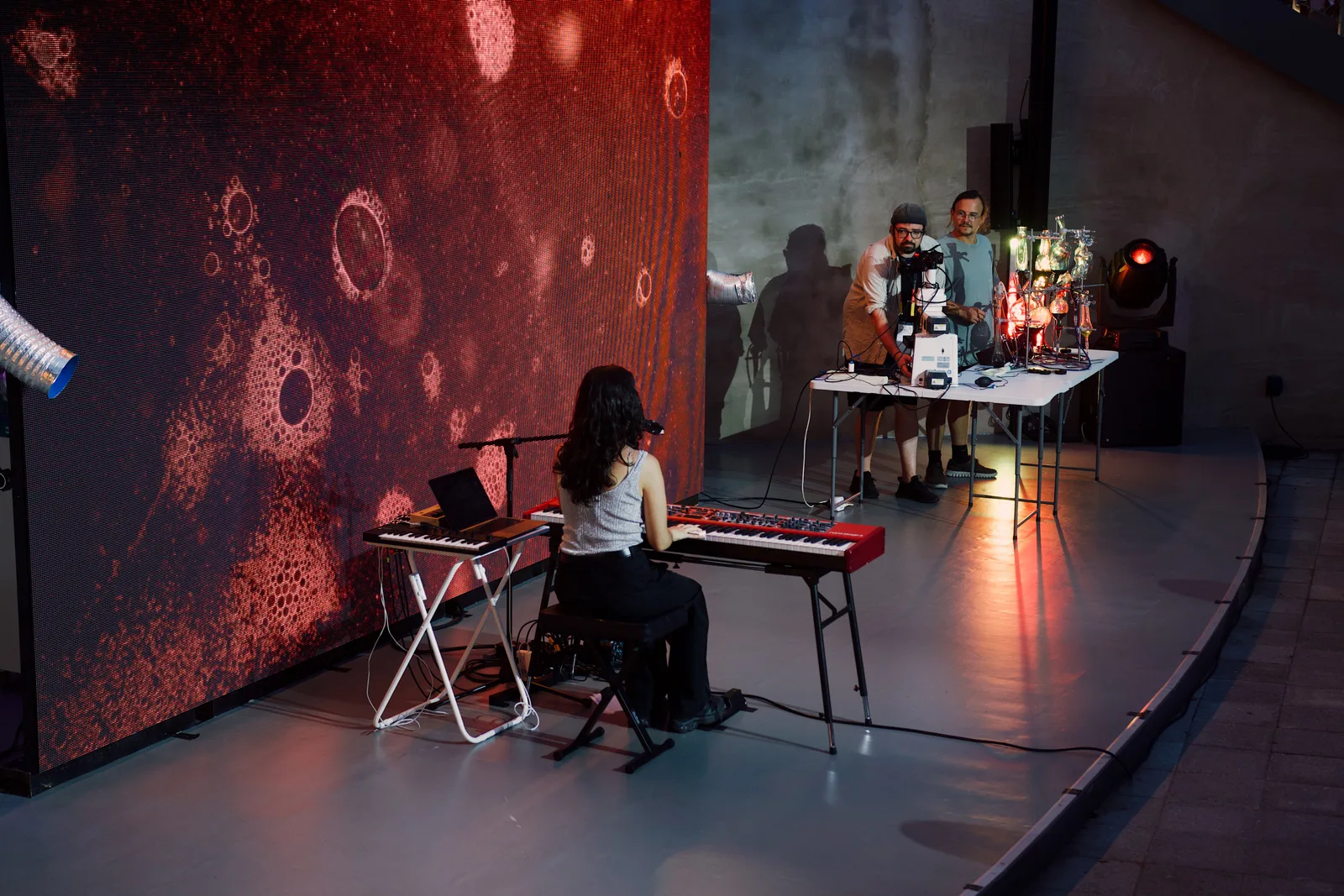
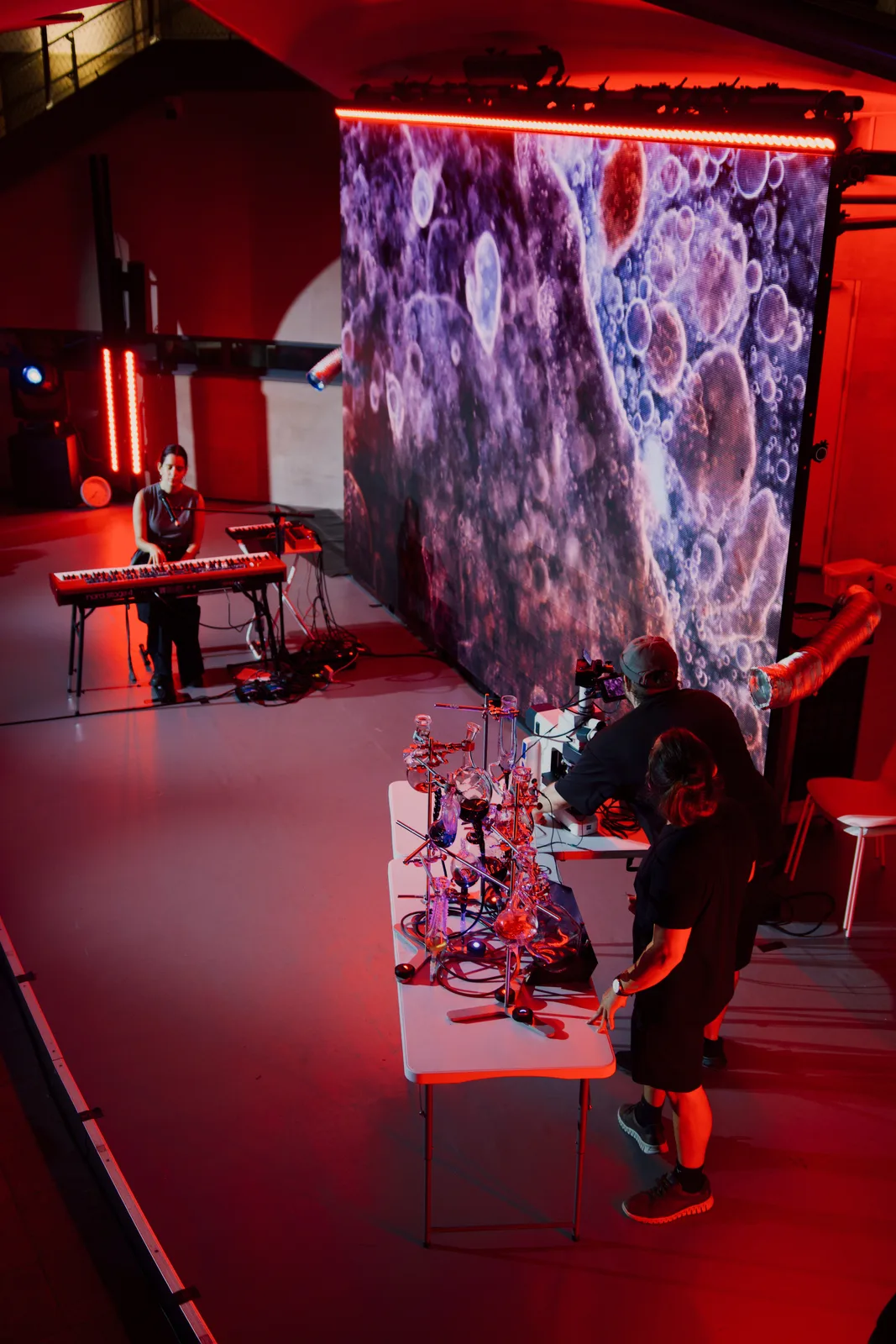
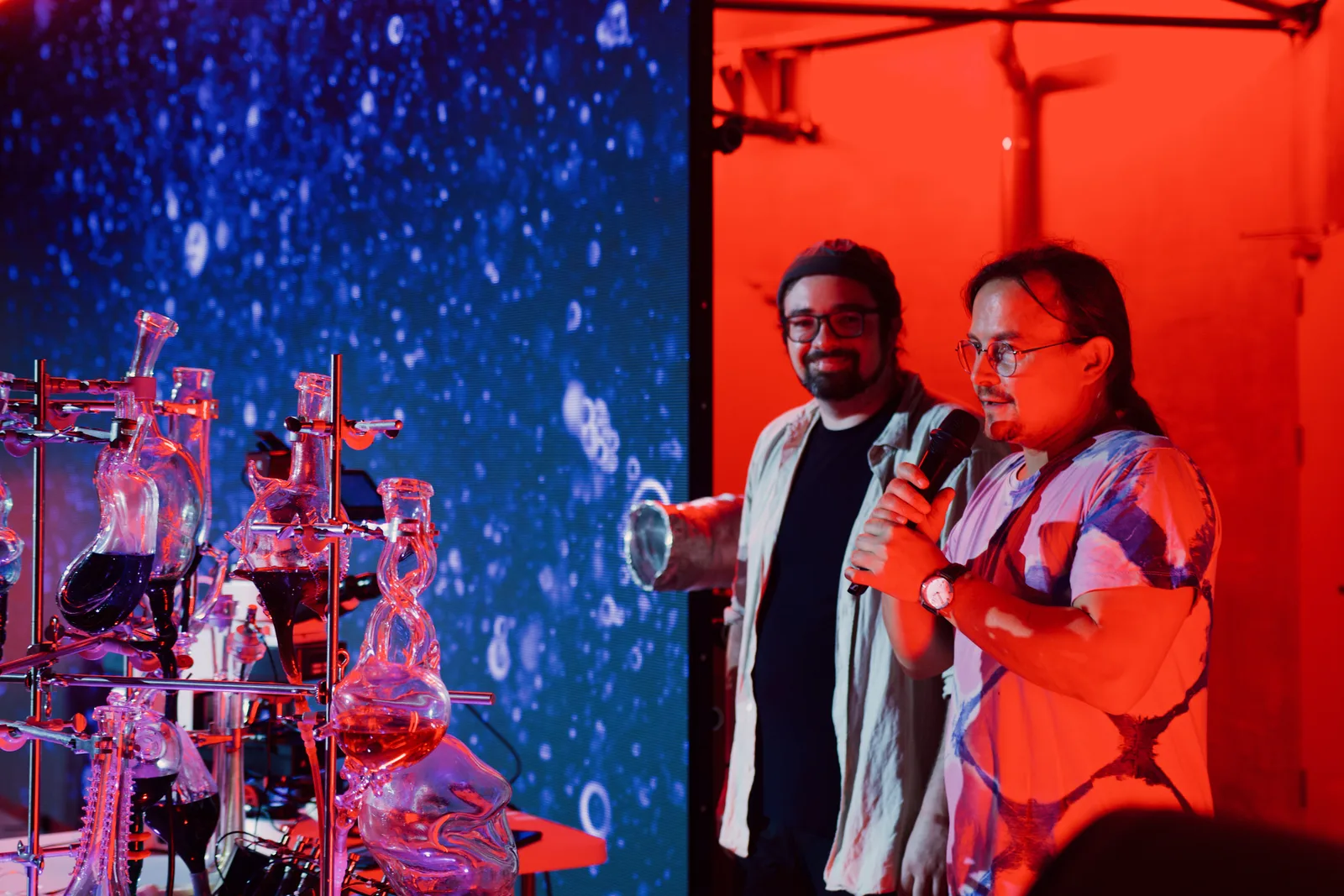
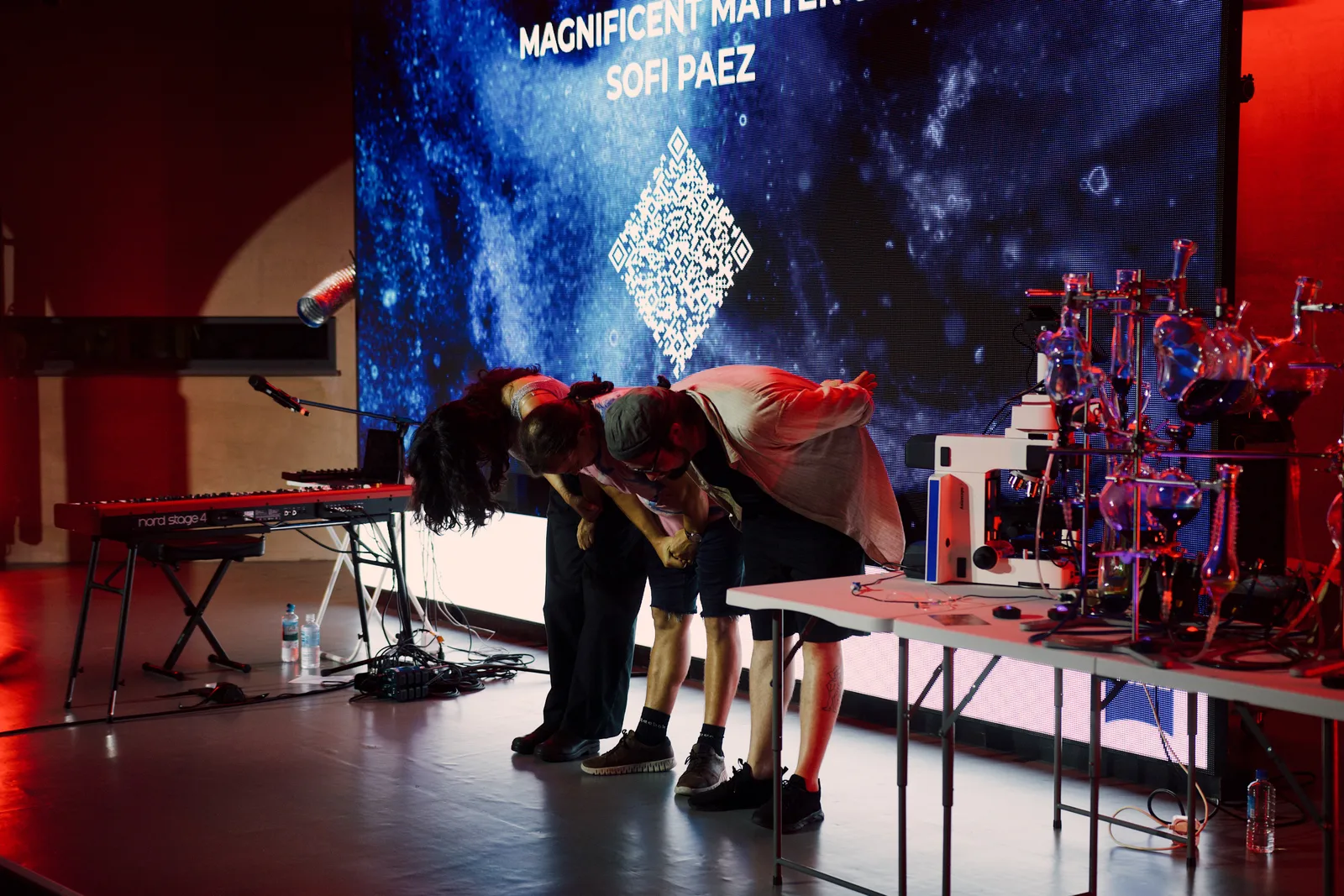
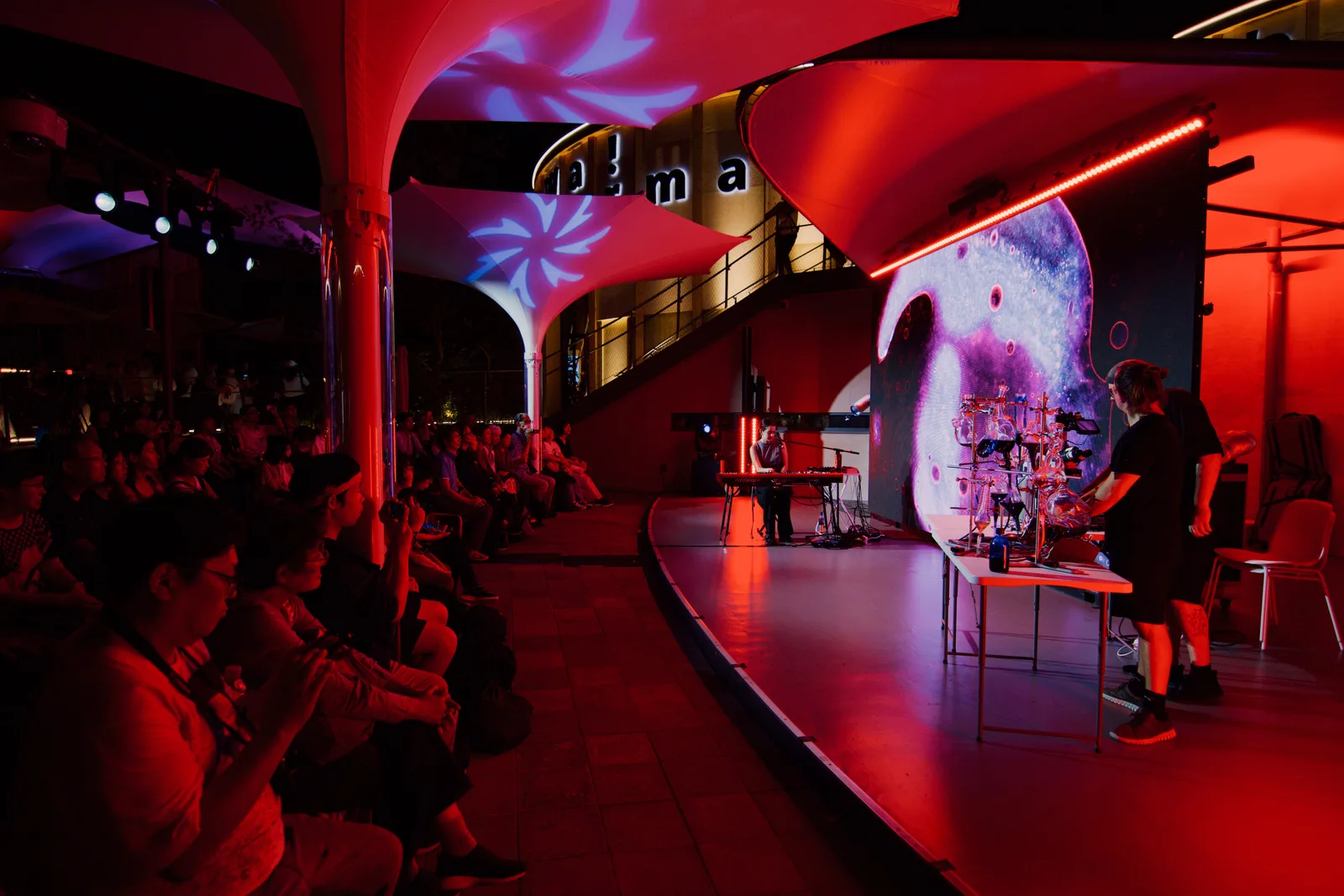
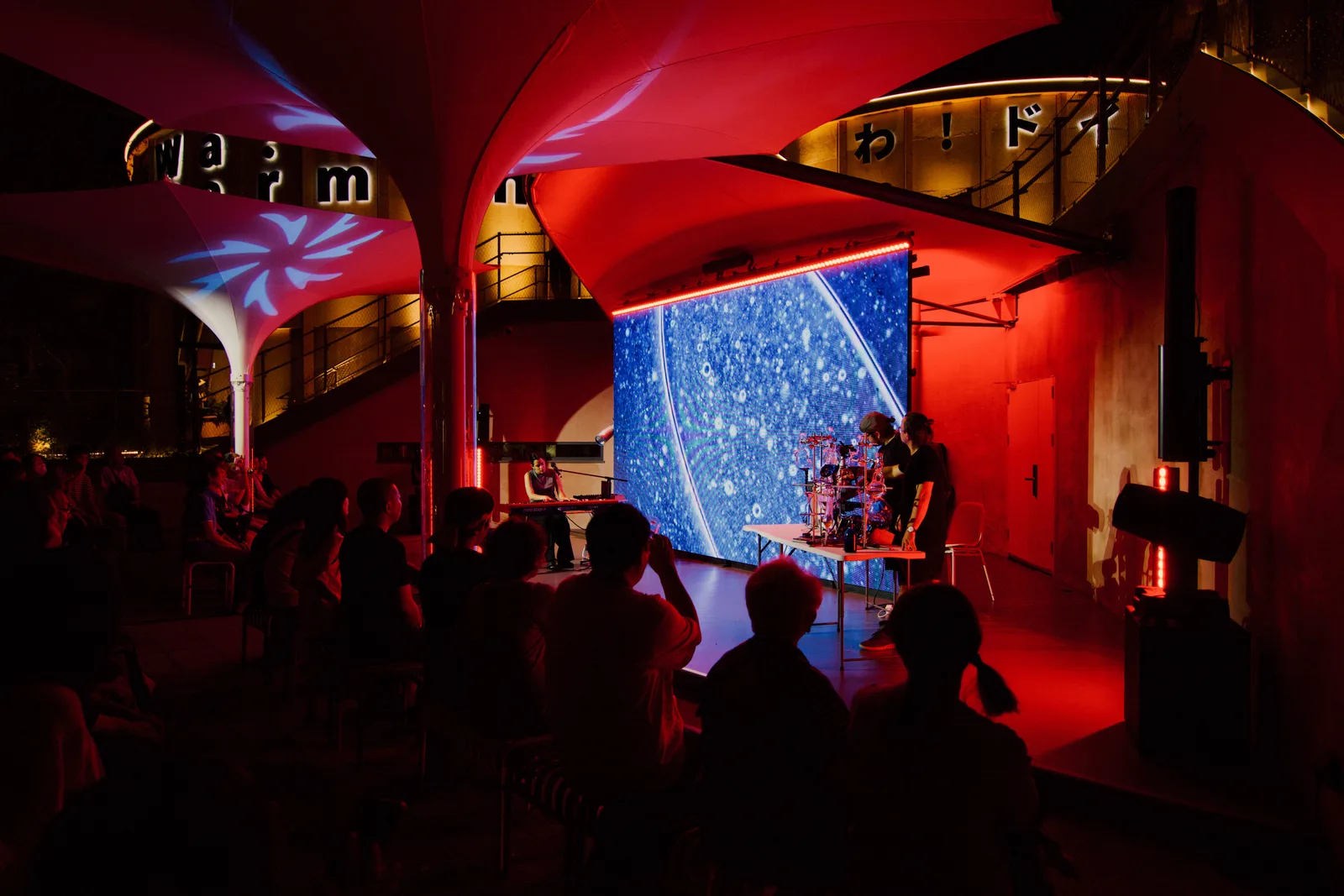
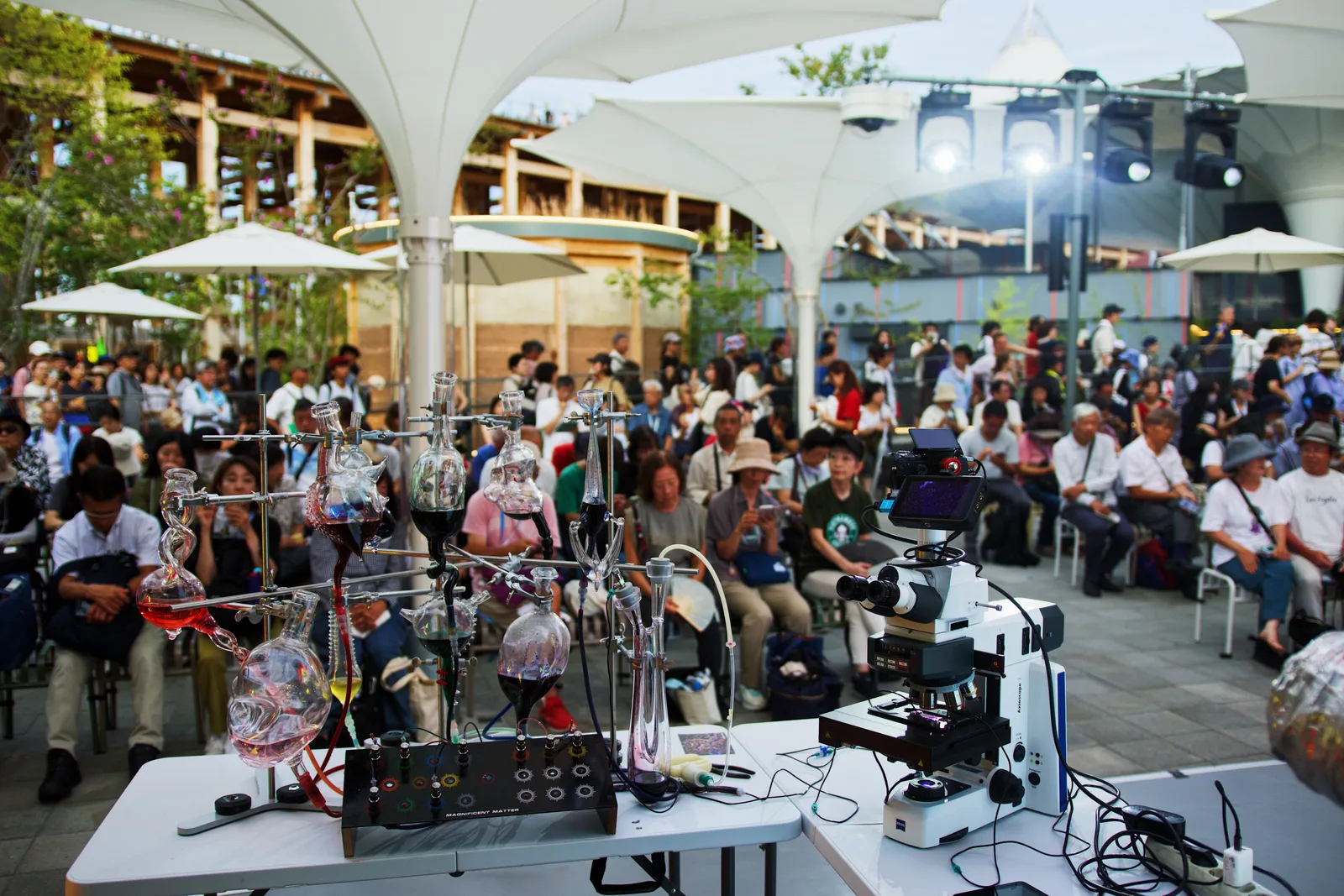
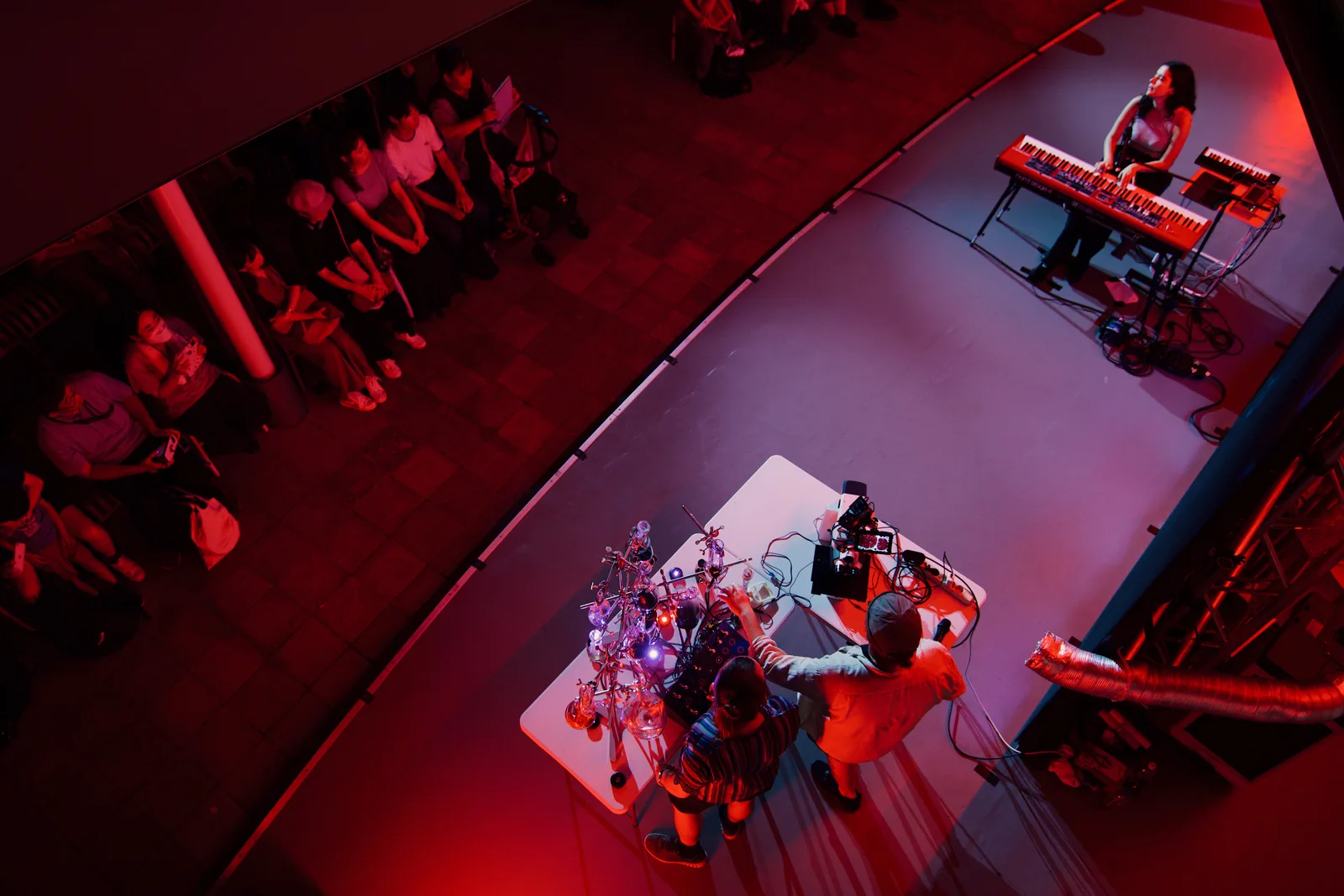
At the centre of the work was a deceptively simple setup: a ZEISS Axioscope 7, carefully prepared liquids, cameras, projection systems, a piano and a keyboard.
Once the performance began, that precision opened into uncertainty.
Under the microscope, materials interacted according to their own internal logic. They spread, folded into one another, resisted, separated and reorganised. Nothing was pre-rendered or digitally simulated. Every image was generated live.
Magnificent Matter prepared and guided the conditions, but could not determine exactly what would happen. Matter remained an active participant in the performance.
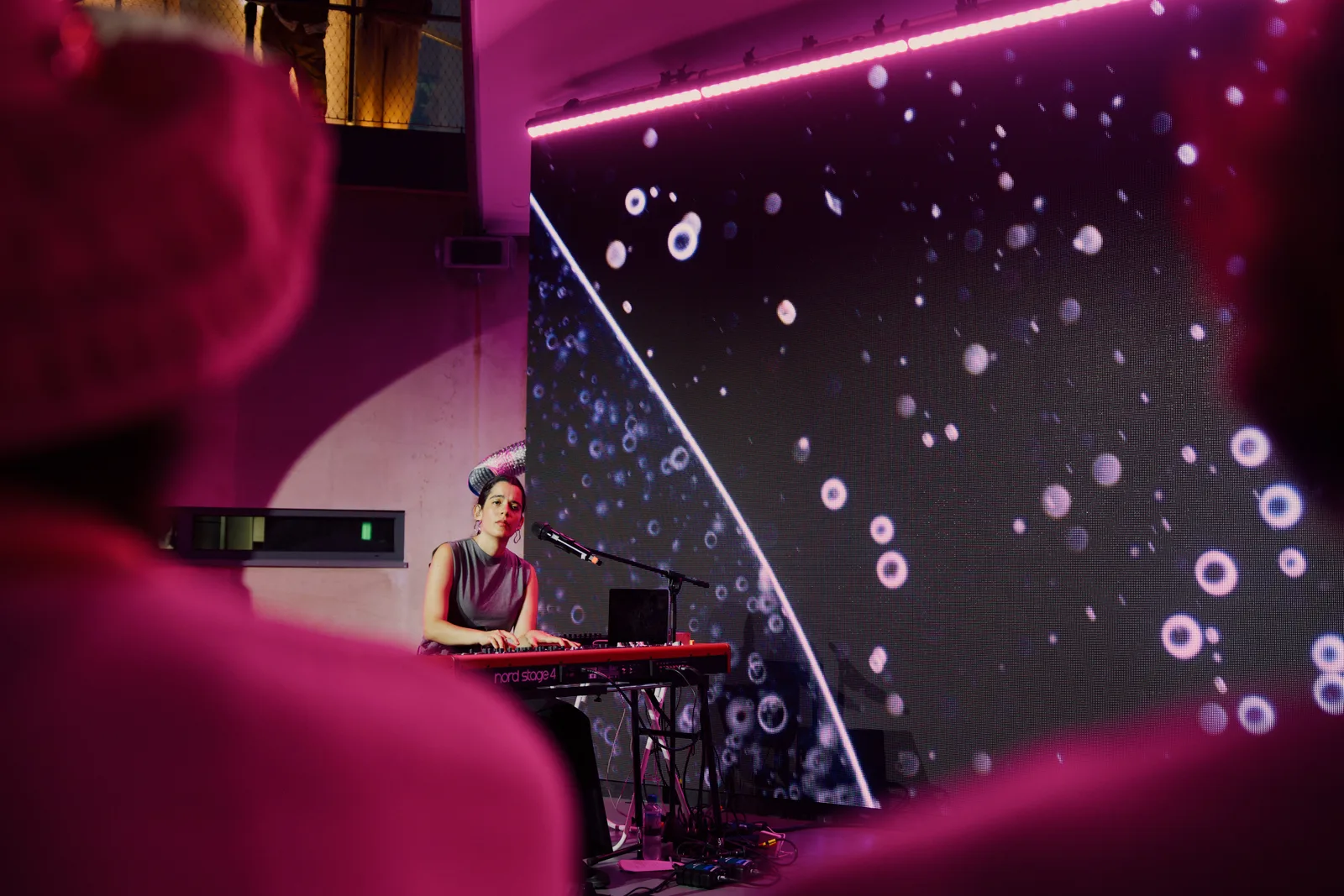
The live microscopy feed was expanded across the Cultural Stage, where minute interactions became immersive fields of movement. Diffusion resembled weather systems. Pigments formed temporary coastlines. Structures emerged like unfamiliar landscapes, while liquids appeared to move with the scale and gravity of planetary bodies.
This transformation was only possible because scientific precision and artistic interpretation were treated as complementary rather than opposing forces.
ZEISS provided the optical clarity needed to reveal subtle structures without imposing an artificial visual layer over them. The microscope made it possible to work with the material as it truly behaved, while the scale of the stage allowed audiences to enter that behaviour collectively.
The instrument moved beyond its familiar role as a tool of individual observation. In Osaka, it became part of a live spatial environment.
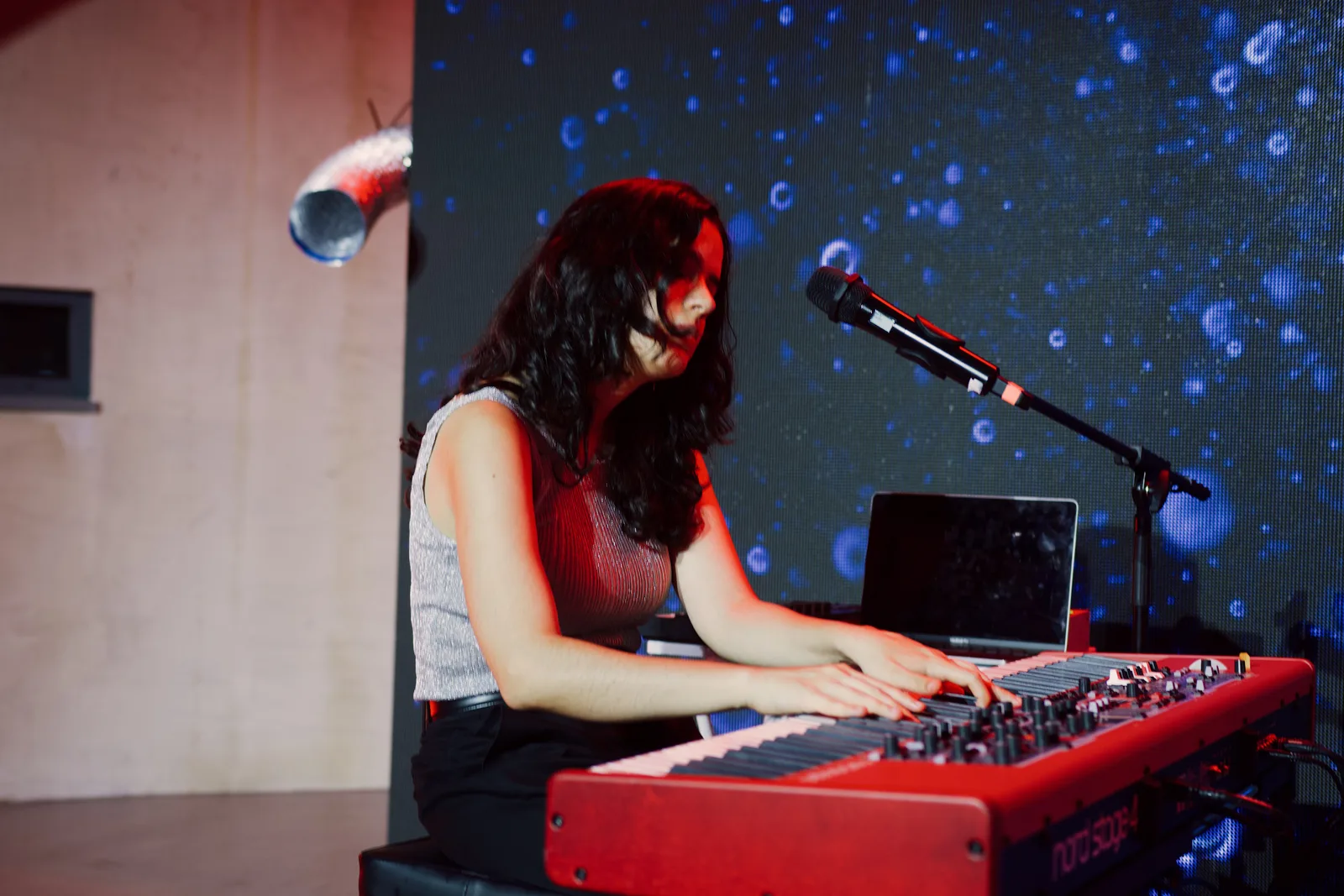
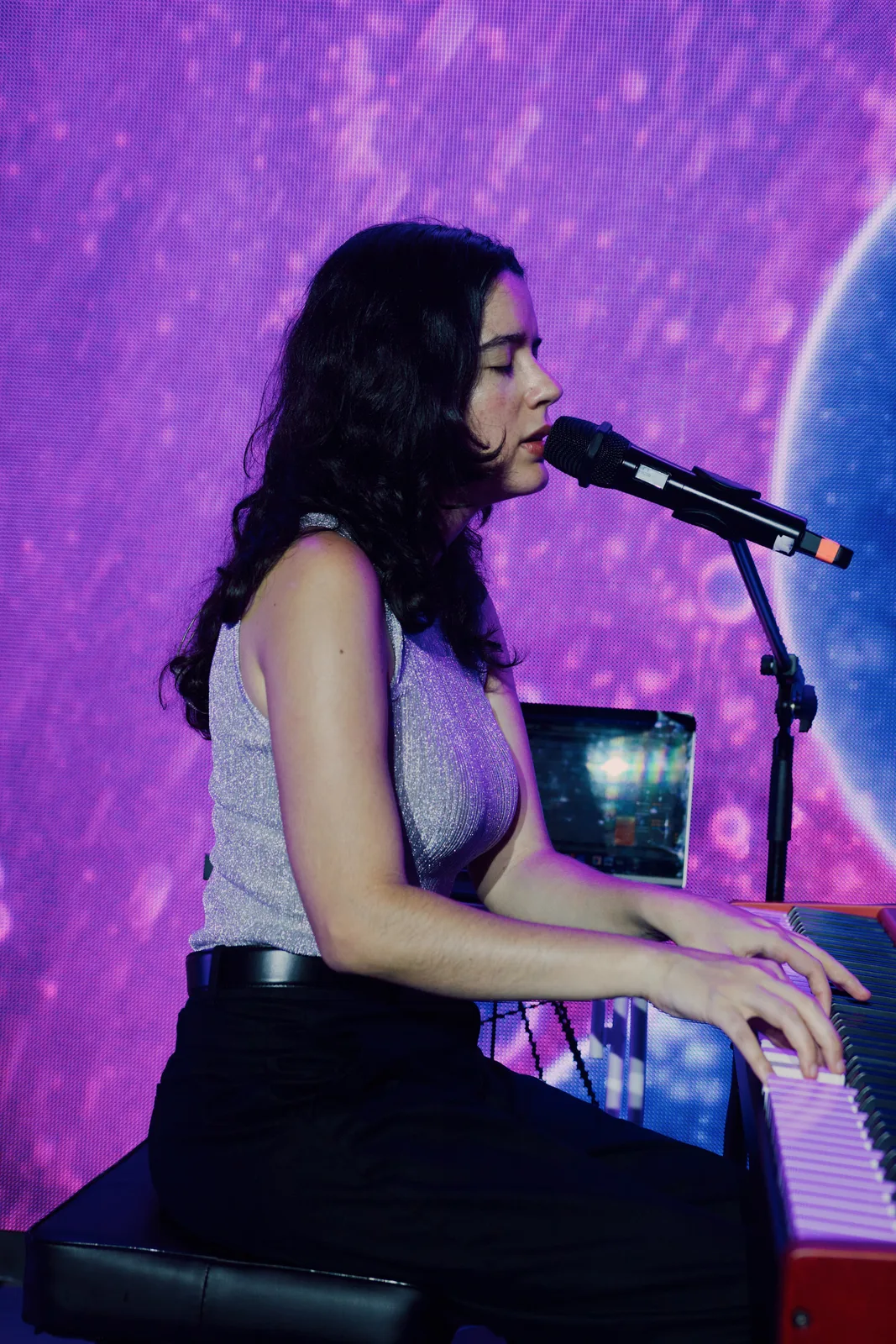
Sofi Paez’s music extended that environment emotionally.
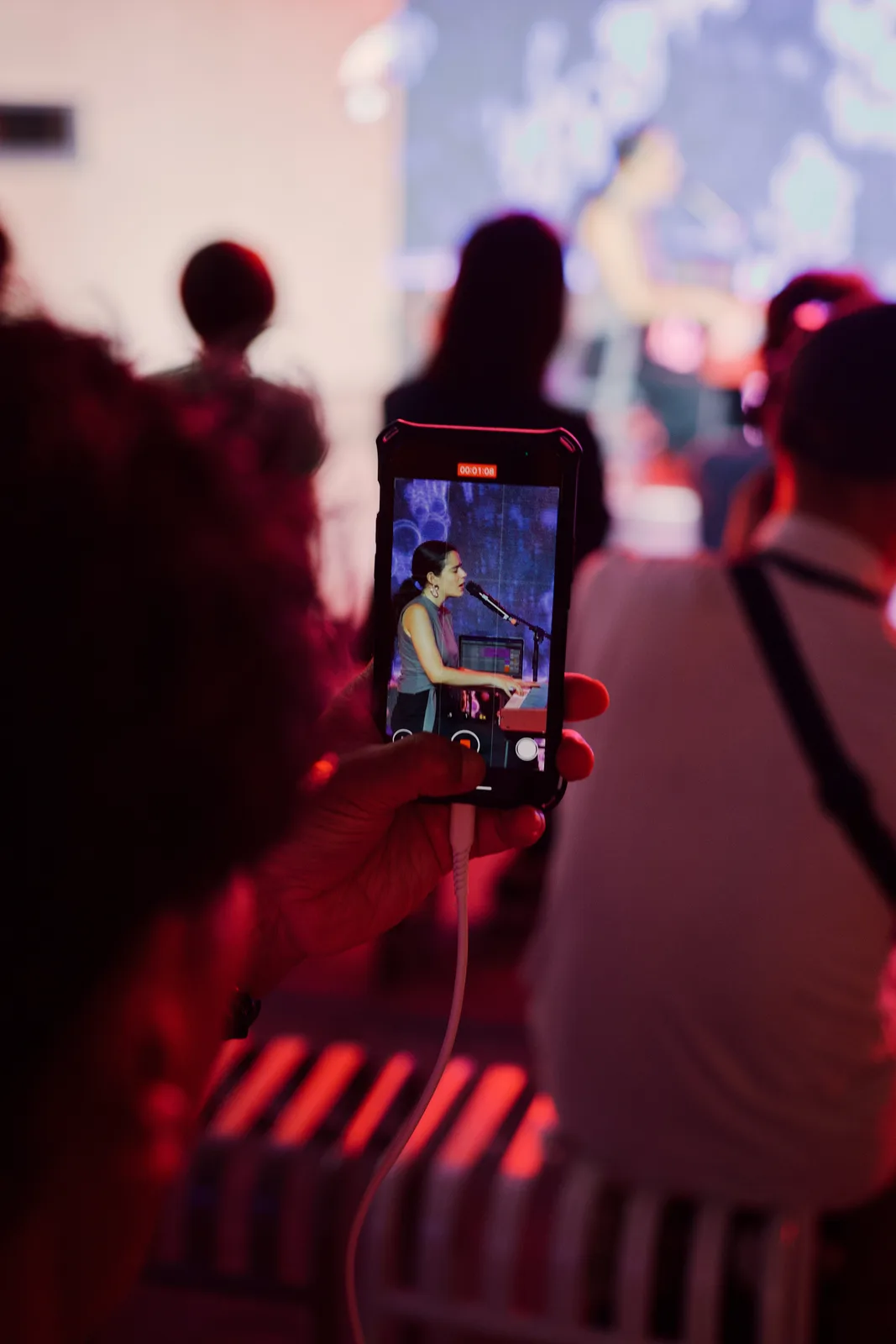
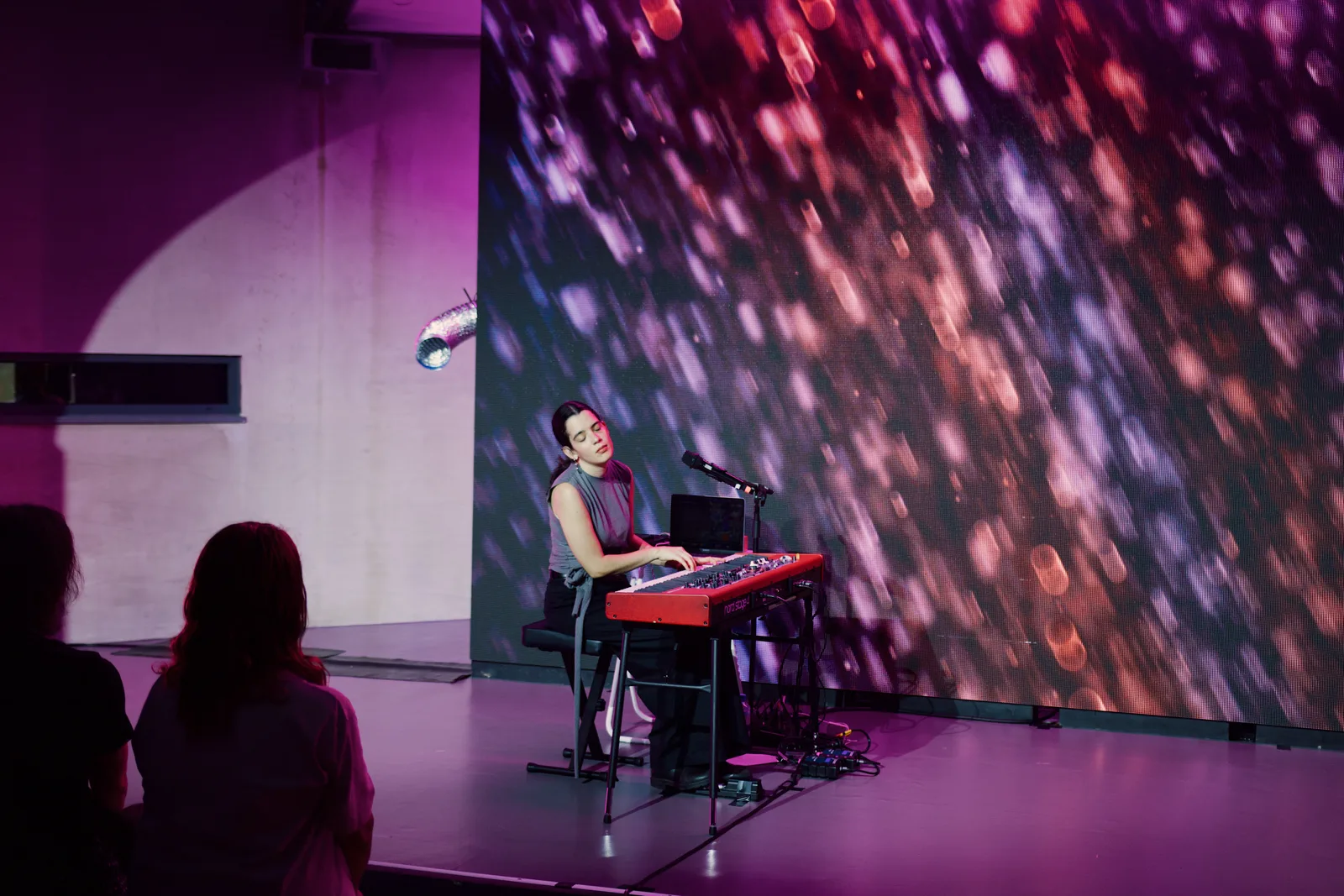
Her piano, voice and restrained electronic textures did not attempt to explain or illustrate the imagery. They moved beside it. Notes lingered long enough for small changes to become significant. Silence allowed the visual field to remain open. Sound created intimacy within the vast scale of the Expo.
At moments, image and music appeared to move together. At others, they followed separate rhythms, allowing coincidence, tension and distance to emerge naturally.
Technology, material and sound each retained their own logic while contributing to the same experience.
Behind this apparent simplicity was a highly coordinated production. ZEISS teams in Germany and Japan worked alongside Magnificent Matter, Sofi Paez, StageLight Berlin and the wider German Pavilion structure to align scientific equipment, image transmission, staging, musical performance, communications and the operational conditions of a World Expo.
Much of that work remained invisible to the audience.
Its success lay precisely in creating a stable framework within which something fragile, unpredictable and alive could unfold.
Representing Precision Through Attention
World Expos are built around scale, ambition and visions of the future. National pavilions present innovation through architecture, technology and carefully constructed narratives.
Within this environment, ZEISS chose to represent itself through an experience of attention.
Rather than demonstrating technology as spectacle, the performance showed what precision can make perceptible. The microscope did not dominate or replace the material world. It made it possible to observe that world more closely.
This approach reflected more than the capabilities of a single instrument. It expressed a broader understanding of scientific innovation as a way of expanding human perception.
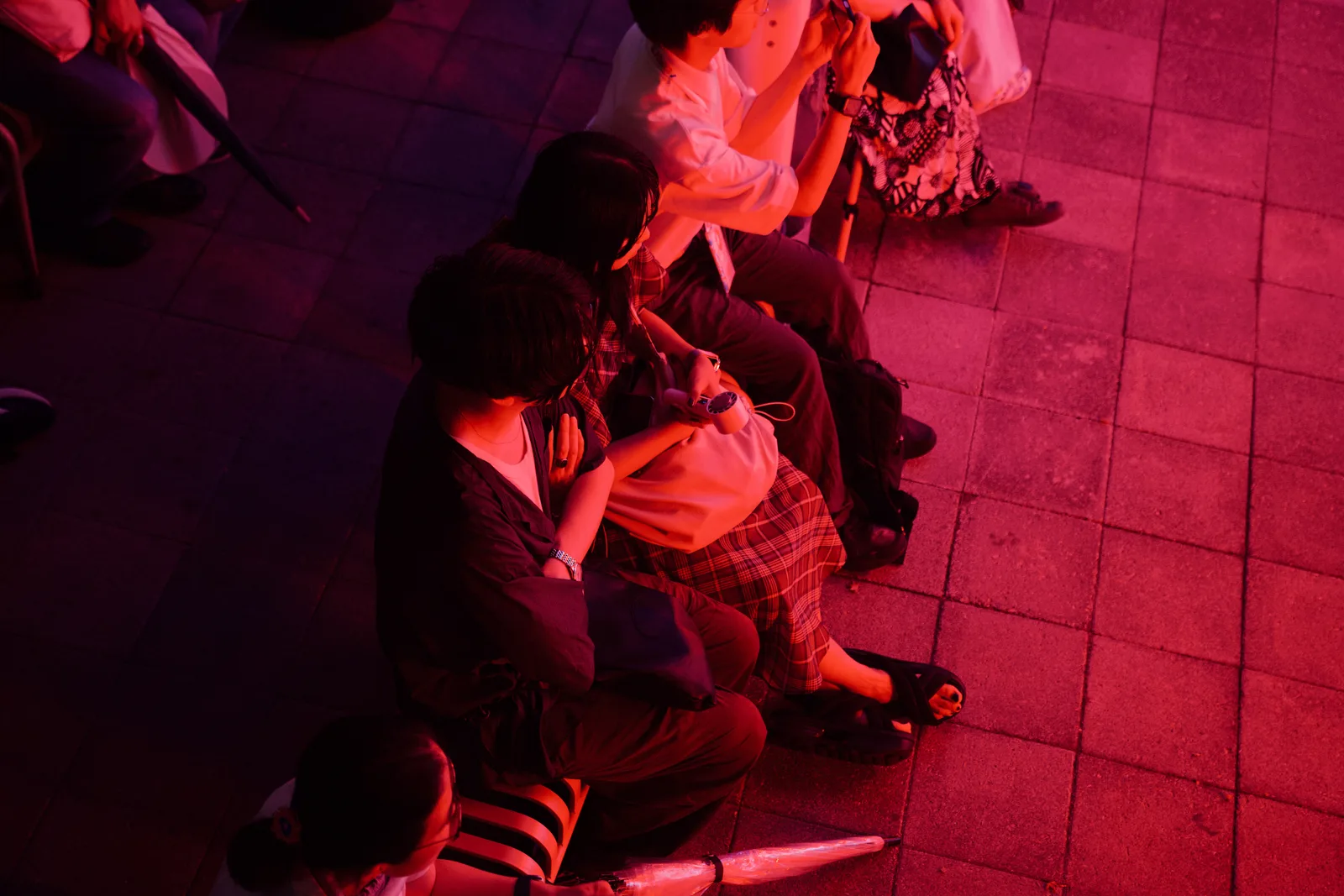
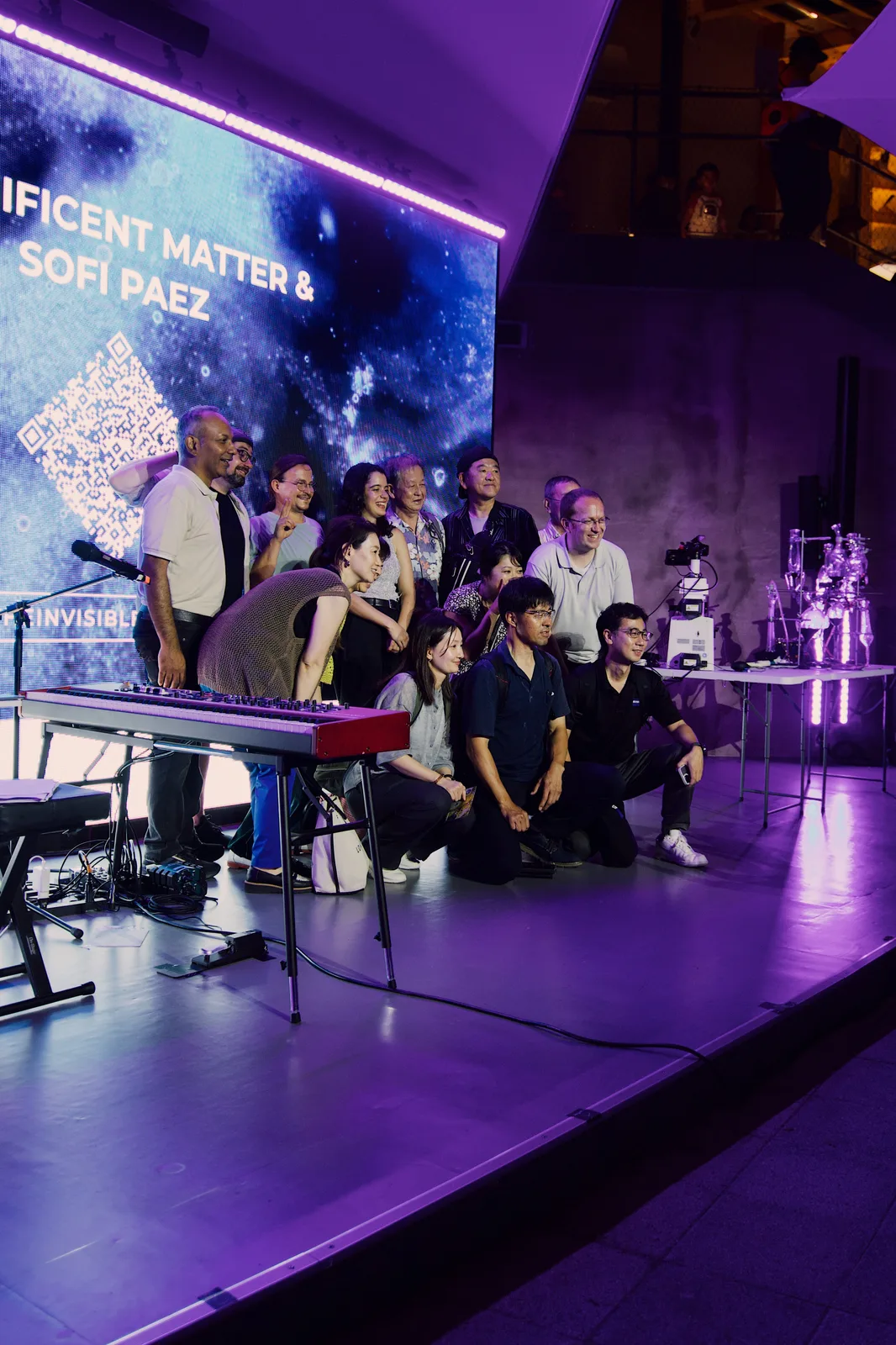
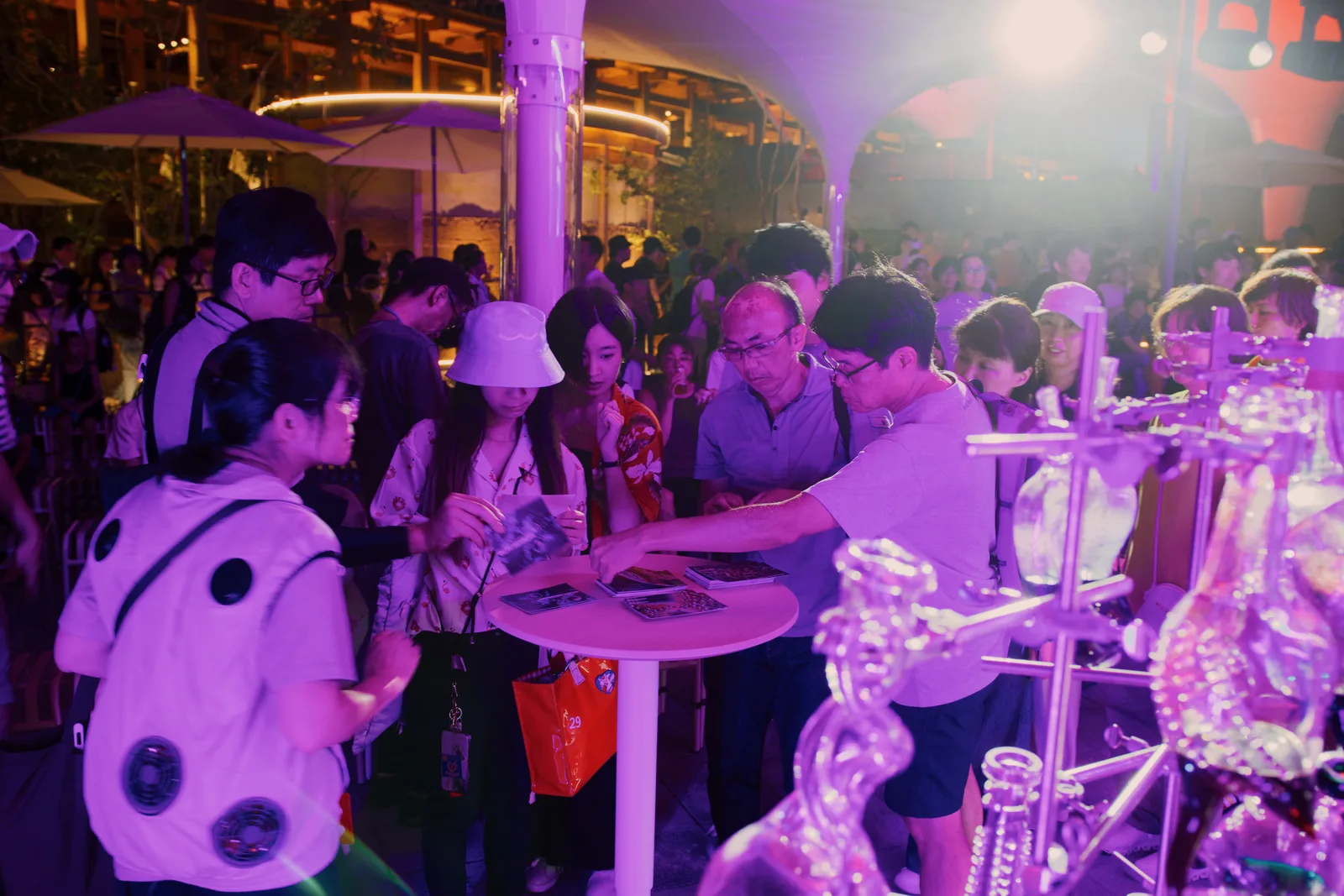
Visitors who had been moving quickly through the Pavilion began to stop. They sat, stayed and watched processes with no fixed narrative or predetermined conclusion.
For nearly an hour, strangers shared the same field of perception.
The vastness of the Expo temporarily receded. The smallest movements became monumental. A liquid boundary dissolving under the microscope could hold the attention of an entire room.
The project demonstrated that representing a technology company does not have to mean explaining every feature or placing the instrument at the centre of the spectacle.
ZEISS was present through what the technology enabled: clarity, closeness and access to realities that would otherwise remain unseen.
After the performances in Osaka, the journey continued through Japan. Over the following two weeks, the team travelled through Naoshima, Kyoto and Nara before arriving in Tokyo, where they were welcomed by the wider ZEISS team.
The meeting created space to reflect on what had been achieved together at the German Pavilion, share impressions from the journey and discuss where the collaboration might lead next. Tokyo was not another production milestone, but a moment of arrival after an intense shared process — an opportunity to deepen the relationships behind the project and begin imagining its future.
The collaboration between Jena, Berlin, Osaka and Tokyo became a bridge between scientific expertise, artistic practice and public experience.
What audiences encountered on stage was therefore not simply microscopy accompanied by music.
It was a shared proposition about how technology might enter culture: not by demanding attention for itself, but by directing attention toward the world.
Inside the German Pavilion, precision became sensitivity. Scientific imaging became a collective experience. The smallest scales opened into immersive landscapes.
And the invisible began to breathe.
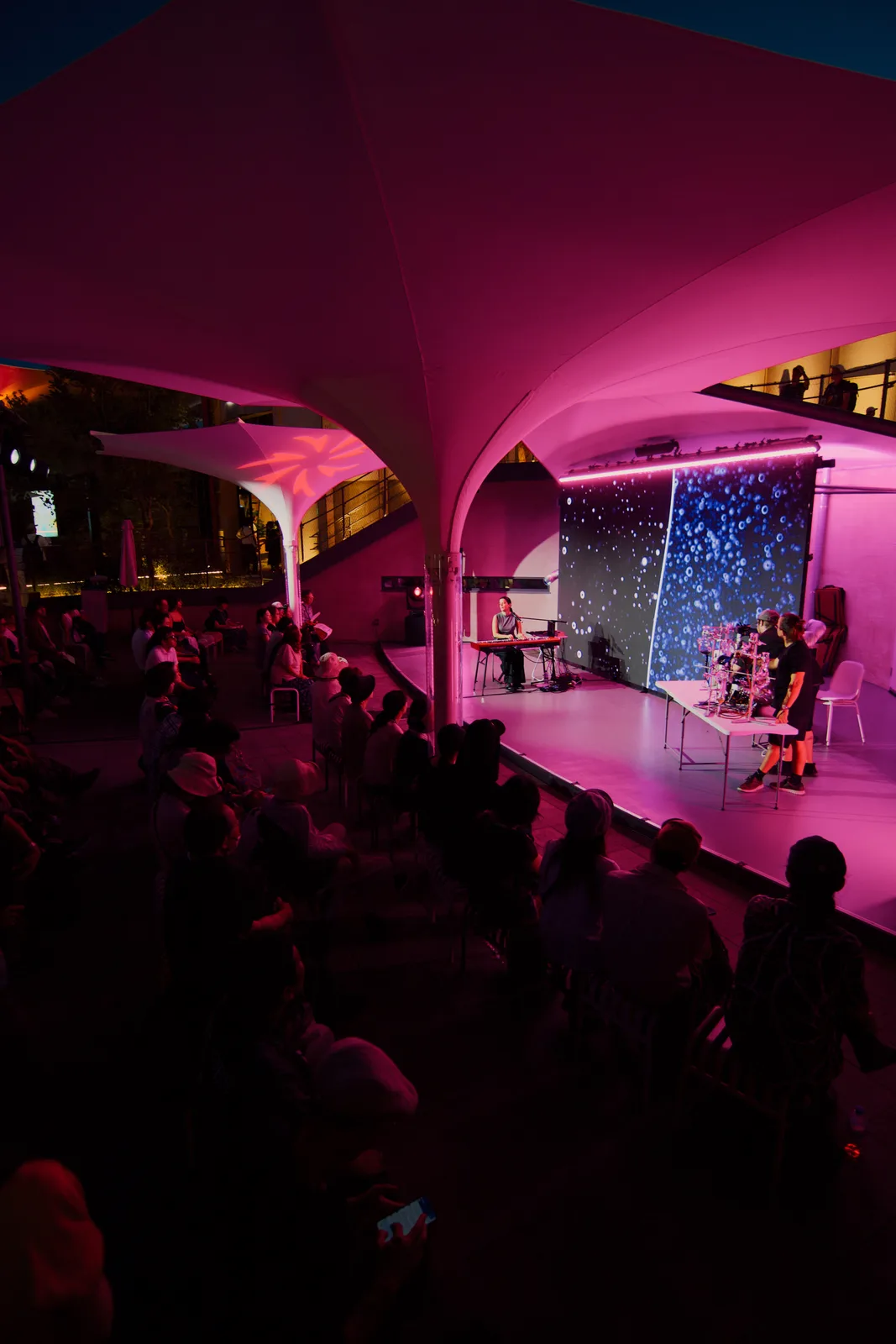
- Venue — Cultural Stage
- German Pavilion
- Film and photography
- Stefano Canavese
- World Expo context
- Expo 2025 Osaka
- Live music — piano, voice and keyboard
- Sofi Paez
- Microscopy partner — ZEISS Axioscope 7
- ZEISS Microscopy
- Production and artist management
- Stagelight Berlin
Continue the exploration.
Echoes in Orbit with Sofi Paez & Tara Nome Doyle
Live / Experience
SPIN2030
Live / Experience
Encounters at 1-06
Live / Experience