
In the Studio
Instruments for attention.
Preparing the conditions for an image that is still becoming.
01 / In the Studio
The material leads
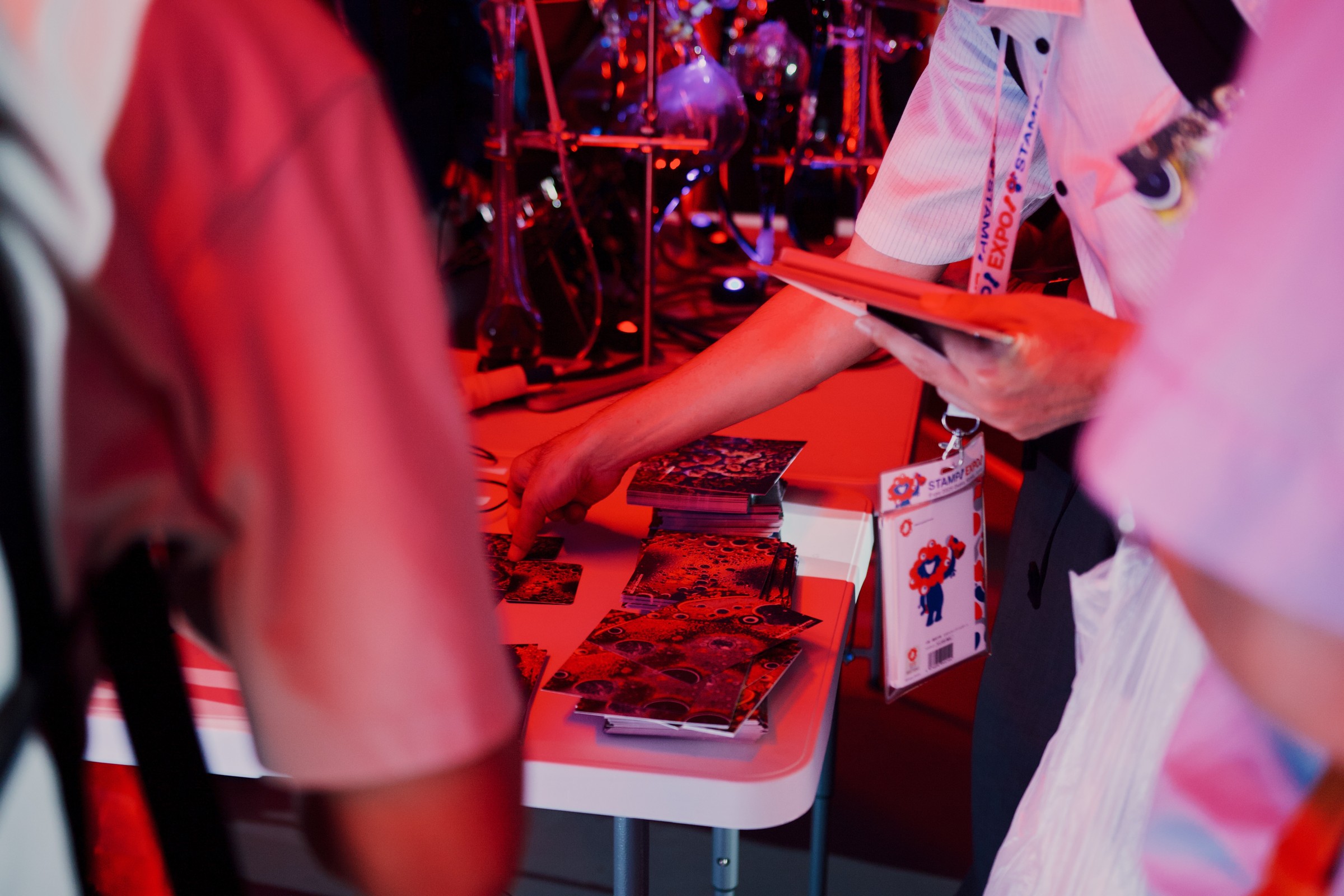
A specimen is a small, testable world. We prepare it, observe it and change conditions to learn which behaviours can sustain an image over time. Density, movement, viscosity and the response to light become artistic decisions because they change what can be seen.
Preparation leaves room for what the material does next. A liquid can spread or separate; a boundary can become more legible and then disappear. Observation gives composition something concrete to respond to.
02 / In the Studio
A complete chain
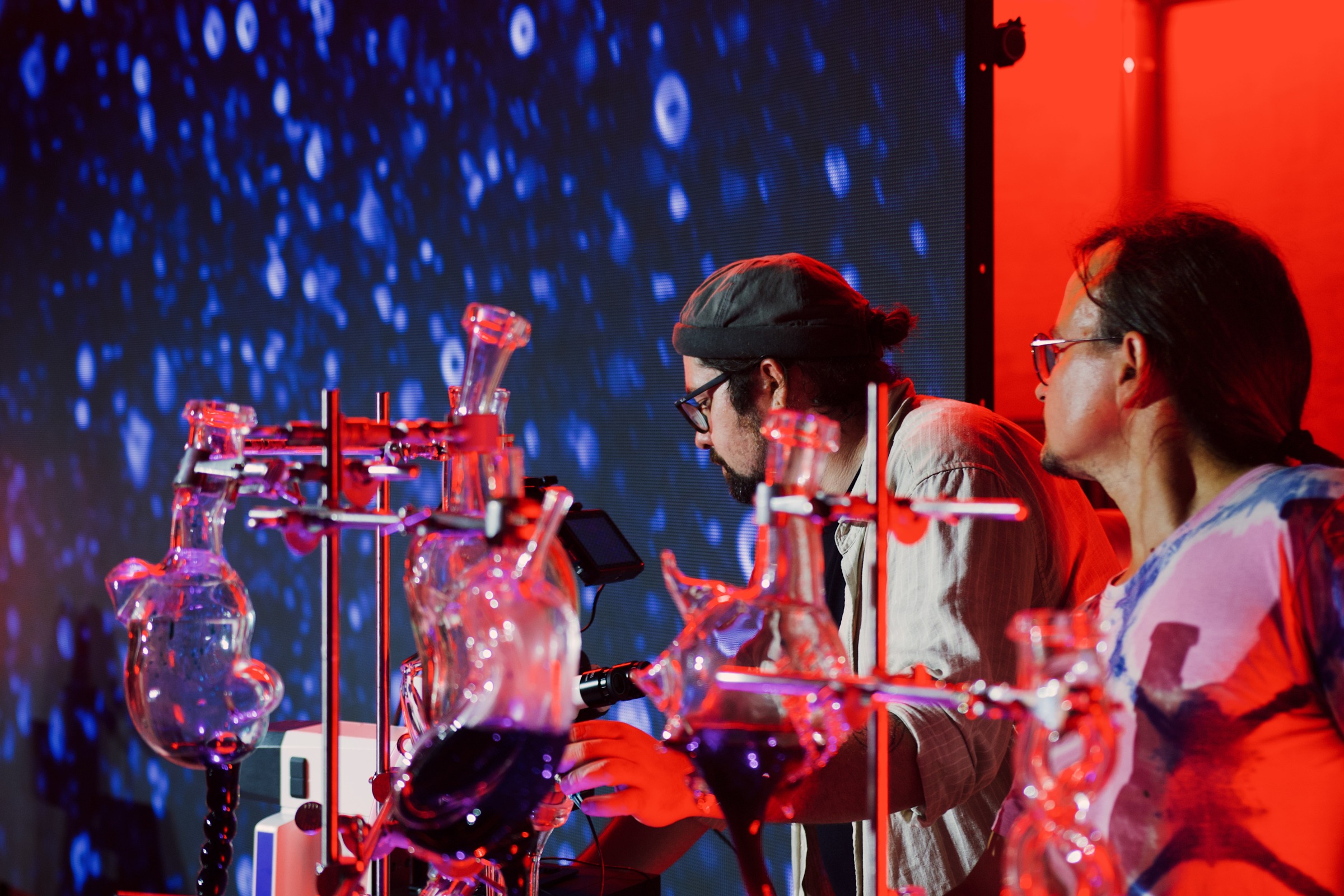
The microscope, light, camera, live feed and projection form a connected instrument. Focus and exposure change the close image. Brightness, framing and the surface of a room change how another person encounters it. The chain is rehearsed together with sound and audience sightlines.
At EXPO Osaka, the ZEISS Axioscope 7 and the glass apparatus remained visible beside the performance. The precision of the setup created a stable framework for processes that continued to move unpredictably. What appeared on the large surface could still be traced to a small physical event.
03 / In the Studio
Image as an instrument
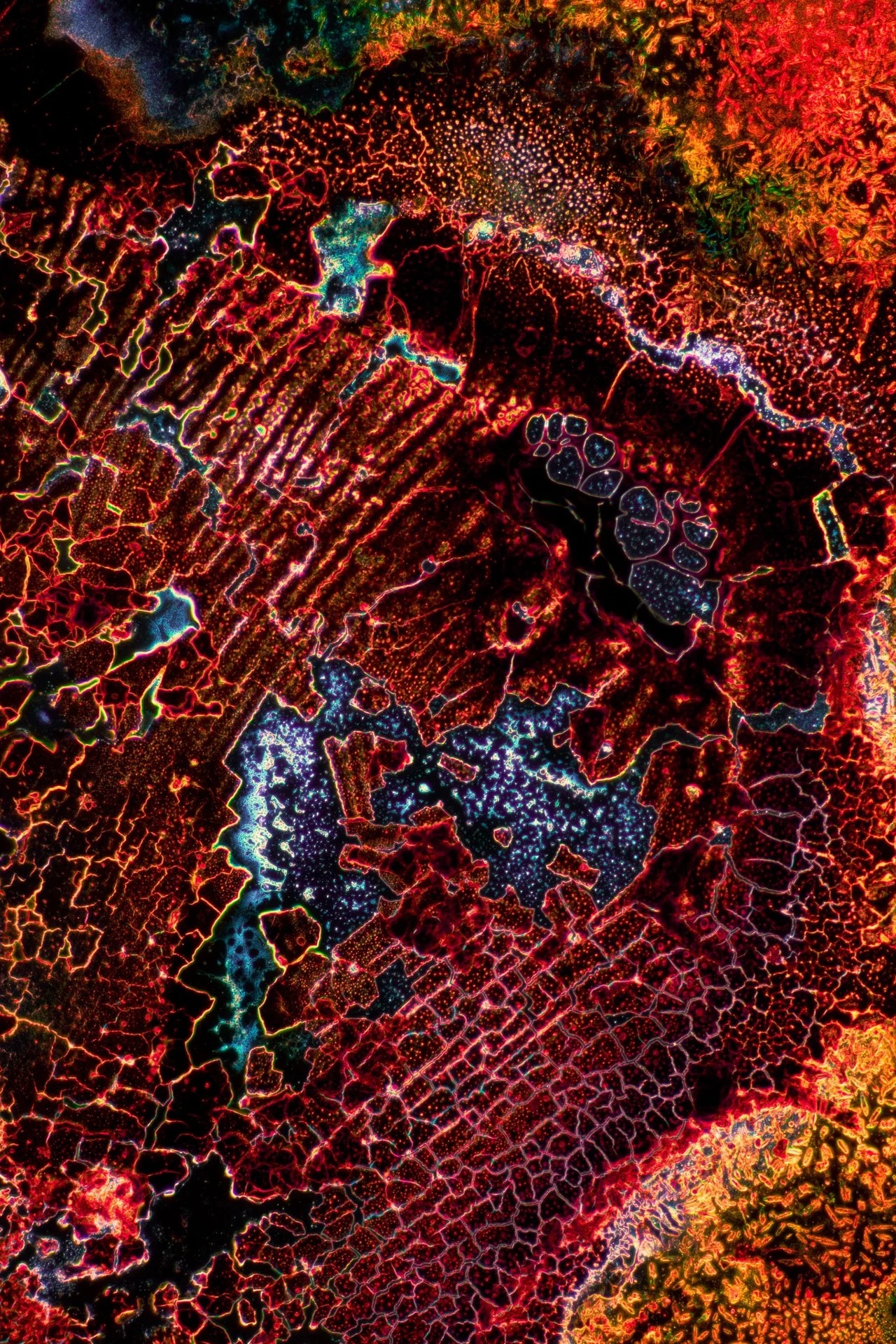
Operating the image involves listening as well as looking. The material keeps its own timing; a musician keeps another. An operator can hold a view, change focus, introduce a variation or let the current behaviour remain. Every control should have a consequence that can be perceived.
This approach carries across different works. The dome in Echoes changes the audience’s relationship to the frame. SPIN2030 places the apparatus in a public science setting. TRYP exposes the connection between hands, glass, computer and the surrounding light.
04 / In the Studio
A wider field
Panorama stitching begins with neighbouring views of a specimen. Overlap and consistent optical conditions allow those fragments to be registered into a larger image. The resulting field can be explored as a whole or through its local details.
Moving from a close capture to a wall-sized image changes the work. Texture can become the dominant structure of a room. Tests at different scales help us ask which relationships survive, rather than assuming that an enlargement is already a finished spatial artwork.
05 / In the Studio
What the tools change
Custom software and hardware belong to this ongoing development. We distinguish the observed material, the captured image and the interventions used to compose or present it. That distinction matters when digital systems or AI enter a project.
In the spatial concept studies, generated environments help explore possible settings around MM artworks. They are labelled as concepts. We keep the material source legible and distinguish a possible setting from a finished installation.
Explore
Methods inside real works.
Next